From “development aid” to shared growth partnerships, a Rome roundtable argues that education, skills and cultural exchange can reset Africa-Europe relations for the decades ahead, including in Senegal, Ethiopia and across sub-Saharan Africa.

From development aid to growth partnerships
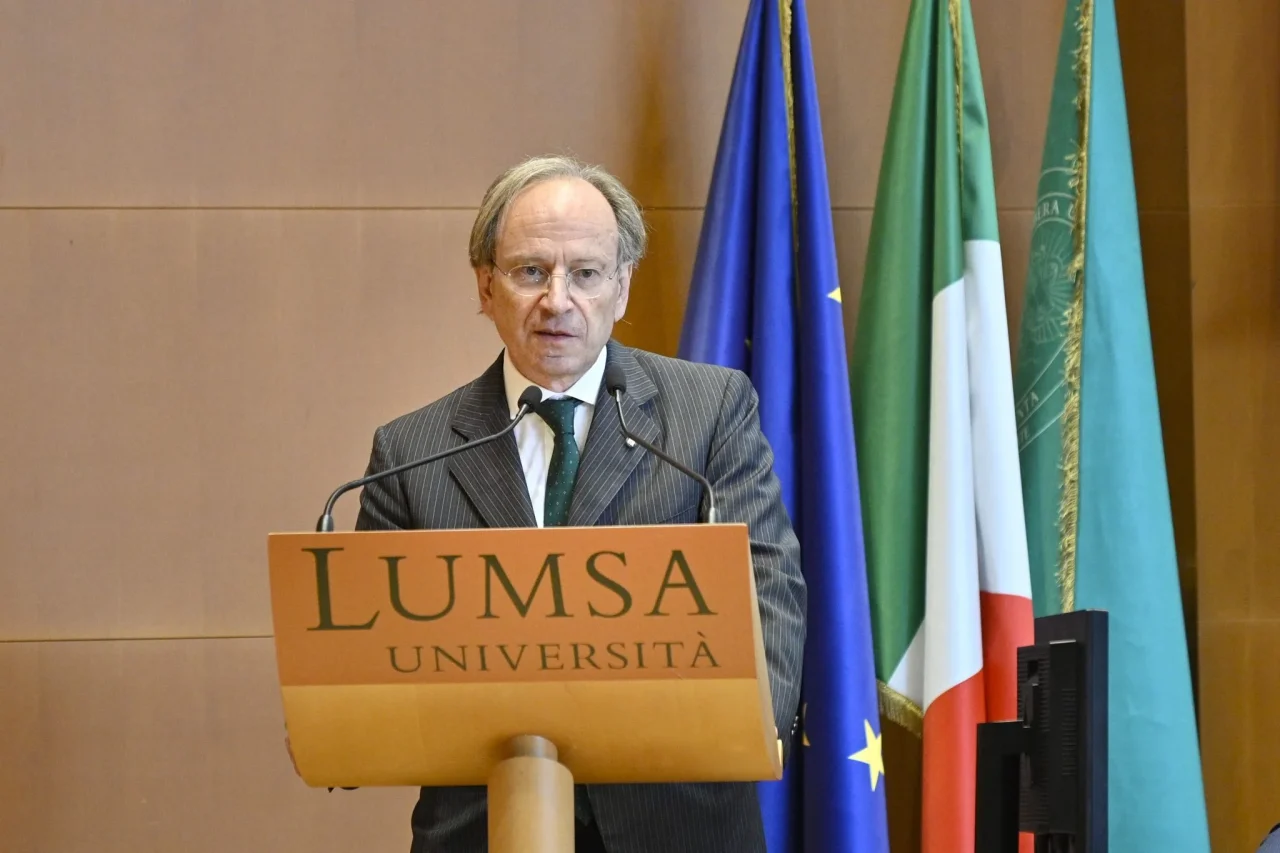
“Education, skills and growth in Africa and Europe” was the focus of a roundtable hosted in Rome by LUMSA University and promoted by Pietro Sebastiani, former Ambassador and now Director of the LUMSA University Africa Center.
The Center is part of the Global Compact on Education promoted by Pope Francis. As Sebastiani stressed, students must be equipped with a realistic and updated understanding of Africa’s role in today’s global context.
Language matters. Choosing “growth partnership” instead of “development cooperation” marks a substantial shift, from an aid-based mindset to a relationship built on shared objectives and mutual responsibility.
This approach does not deny the challenges Africa faces, which are real and require solutions, but it reframes the conversation around the continent’s long-term potential and scale, far beyond outdated narratives of dependency.
Speakers underlined that Africa-Europe relations cannot be framed only in economic terms. People, skills and education must be central, as highlighted by Stefania Giannini, UNESCO Assistant Director-General for Education.
Africa and Europe and the inverted demographic pyramid
Giannini described an inverted demographic pyramid between Europe and Africa that makes the two regions structurally complementary. By 2050, one in three young people globally will be African, making education a decisive factor for the continent’s future.
“While policy debates often focus on primary and secondary education, the critical bottleneck lies in higher education. Only 9% of young Africans hold a tertiary qualification, compared to 47% of European graduates.
UNESCO has launched the Campus Africa programme to strengthen higher education systems capable of projecting Africa into the future. The initiative promotes inclusive, high-quality universities designed to become hubs of innovation, sustainability and social development.
Particular attention is given to girls’ education, recognised as a strategic pillar for long-term economic and social progress.“
Raising the level of ambition through higher education
Asked about the role of education in Africa’s growth, Giannini argued for a shift from short-term project thinking to a broader vision. Without universities, research centres and innovation ecosystems, Africa’s growth prospects will remain constrained.
Campus Africa is supported by 30 UNESCO Chairs, an international network of universities collaborating to address urgent global challenges. Their work focuses on strengthening research infrastructure and expanding advanced technical education in key sectors such as innovative agriculture, renewable energy, digital transformation and artificial intelligence.
Additional priorities include supporting doctoral programmes, promoting student mobility, and aligning curricula with labour market needs.
The skills mismatch in African labour markets
The gap between education systems and labour market needs remains one of Africa’s most pressing challenges. Cleophas Adrien Dioma, executive president of Italy-Africa Business Week, stressed that training without employment opportunities risks failing young people.
He pointed out that Italy’s Mattei Plan explicitly focuses on business and partnership, addressing a weakness of traditional development cooperation. After education, young people need access to jobs and entrepreneurial pathways.
Dioma also highlighted Europe’s continued appeal to African youth, often stronger than that of China or Russia, partly due to linguistic and cultural ties.
Federico Bonaglia, deputy director of the OECD Development Centre, provided further context.
“Around 80% of African companies struggle to find workers with adequate skills. Education levels remain low, employment is largely informal, and productivity is concentrated in low-value sectors.
With around 27 million young Africans entering the labour market each year, transforming education systems and economic structures has become an urgent priority across sub-Saharan Africa.”
The Mattei Plan and a long-term partnership vision
According to Lorenzo Ortona, deputy head of the mission structure responsible for implementing the Mattei Plan at Italy’s Presidency of the Council, education is a non-negotiable foundation for any sustainable partnership with Africa.
The Plan adopts a medium-to-long term perspective and is built around collaboration rather than unilateral intervention. Training initiatives are designed to respond directly to African labour market needs.
Projects include training-of-trainers programmes launched in Algeria with relevance for the wider continent, cooperation with Enel on renewable energy, and collaboration with Confindustria to assess production system needs. These efforts are also linked to Italy’s recent migration decree, which foresees around 500,000 job opportunities for migrants.
Ortona emphasised that while intergovernmental support can trigger momentum, private enterprise remains the driving force behind durable economic engagement in Africa.
Culture as a driver of skills and value creation
Cultural cooperation also plays a role in redefining Africa-Europe relations. Aruna Francesca Maria Gujiral, Director-General of ICCROM, presented a partnership with the Vatican’s School of Arts and Crafts at the Fabbrica di San Pietro.
The programme will enable young African artists and artisans to undertake a year-long training experience, with six months in Italy and six months in Africa. Participants will then be expected to transfer acquired skills to their home countries.
The initiative involves partner institutions in Côte d’Ivoire, Egypt, Kenya and Tunisia, creating a cascading model of knowledge sharing that links cultural heritage to skills development and local economic impact.
LUMSA University Africa Center and a new narrative on Africa
In a conversation with Pietro Sebastiani, the vision behind the LUMSA University Africa Center emerged clearly.
Collaboration is a relationship between equals
You spoke about a shift from development cooperation to collaboration for growth. Not a formal change, but a radical one in how relations between Africa and Europe are understood.
In the past I was director of development cooperation, and I find that term somewhat outdated. Semantics matter too.
I prefer to speak about growth, even if at different speeds, rather than development, because the word development implicitly carries the idea of underdevelopment.
The term collaboration, instead of cooperation, also helps remove any implication of subordination. Collaboration is a partnership, a relationship between equals, where everyone contributes what they have and takes what they need.
This centre was established at LUMSA University only recently, and today’s event was an opportunity to officially launch it and introduce it to the wider public.
It was created precisely to offer young people, female and male students at LUMSA, an updated view of the African continent on the global stage, and of its trajectory over the coming decades.
To this end, we have launched a Winter School through which our students will spend a period in Kenya to engage directly with businesses, culture and people.
Unfortunately, Africa suffers from poor representation and deeply rooted stereotypes that we need to correct, not only for Africans, but also for ourselves, for our own benefit.
An open centre
What is the core mission of the LUMSA University Africa Center?
The LUMSA University Africa Center is an open centre. It is not simply a group of scholars or an academic centre focused on African history, it is something broader.
There will certainly be an academic dimension, but there will also be space for African voices, public events, and work on issues such as stereotypes and entrepreneurship.
As highlighted during today’s event, we also want to focus strongly on skills and education, given that we work with young people in a university environment.
We would be glad to stimulate similar initiatives
Geopolitical balances are being challenged every day. Africa finds itself, in a way, caught between China and Russia as they replace the United States. What role can Europe play?
Maps often depict Africa as smaller than it really is, and when we close our eyes, we also imagine it as smaller, even in terms of scale.
In reality, Africa is vast and offers so many opportunities that there is truly room for everyone. The more initiatives emerge, the better.
The LUMSA University Africa Center does not want to be a self-centred initiative that seeks to overshadow existing or future projects. On the contrary, we would be pleased if our centre inspired others to create similar initiatives.
And we should not be surprised by China’s presence in Africa, it has been there for centuries. All coastal cities in East Africa have had Indian quarters for hundreds of years. It is our Eurocentric perspective that makes us think this is a recent phenomenon.