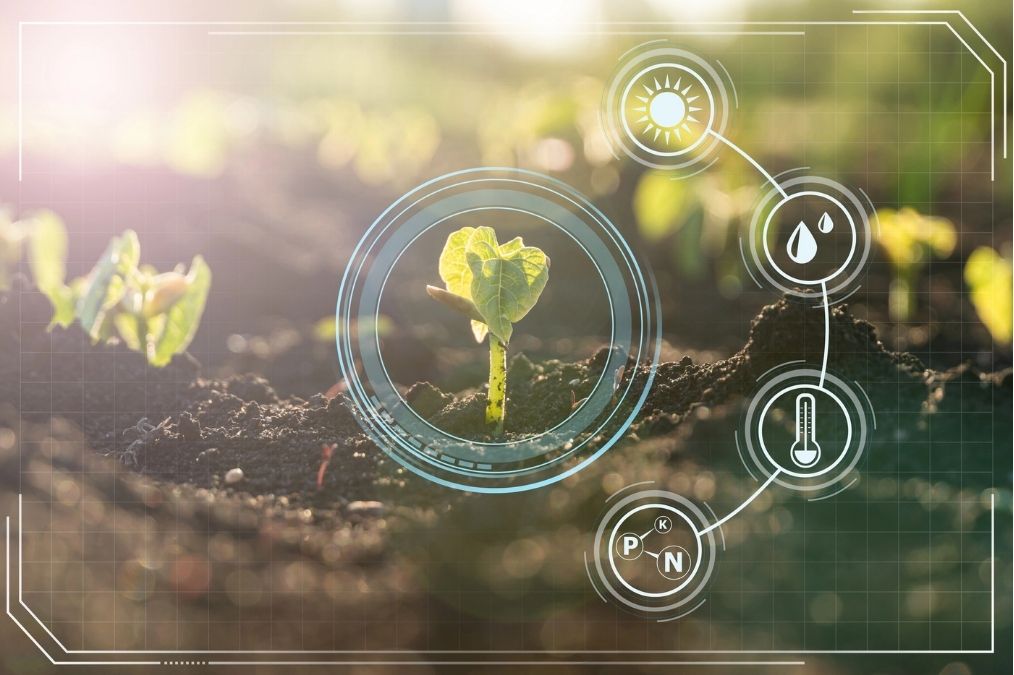
Solar agritech turning water management into a controlled resource
The future of food security does not depend only on large international investments, but also on the insight of those who know the land deeply. This is the case of Well Done Agri-business, an entrepreneurial initiative born from the meeting of two young innovators determined to challenge the traditional system. Their mission is to turn water management from a critical constraint into a controlled resource. By integrating solar-powered hydraulic pumps, drip irrigation systems and soilless farming models, the startup delivers not just equipment, but complete turnkey production ecosystems.
Rinnovabili interviewed its founder, Ware Luther, to learn more.
Building a new agricultural model from the ground up
Well Done Agri-business was founded as an entrepreneurial initiative in Burkina Faso. When and how did the project begin, and what needs of local agriculture pushed you to develop turnkey solutions for farms and rural communities?
The Well Done Agri-business project was born from the desire to contribute concretely to the agricultural development of our country.
My name is Ware Luther, I am 28 years old and I was born in Burkina Faso. At the age of 10, I moved to Italy, to the province of Pordenone, for family reunification. Despite my education and upbringing in Italy, I have always maintained a strong connection with my country of origin and the challenges that shape its development, particularly in agriculture. The project began to take concrete shape in the summer of 2020.
At that time, I had just completed my specialization in agromechatronics through an ITS program, while my cousin and partner, Gambo Arsène, who now lives and works in Burkina Faso, had graduated as an agronomist engineer specialized in rural crops. This collaboration between someone working directly on the ground and someone bringing technical expertise and an international perspective is one of the key strengths of our project.
From the beginning of our studies, we shared a common goal, to contribute to food self-sufficiency in Burkina Faso and support the development of a more efficient and sustainable agricultural system.
Agriculture in Burkina Faso is still largely based on subsistence, with strong dependence on rainfall and limited access to tools and technologies needed for larger-scale production. One of the main challenges is water management, a critical resource for ensuring stable and continuous agricultural output.
For this reason, we chose to focus on designing and building irrigation systems and integrated farms, offering turnkey solutions to help farmers and rural communities improve productivity and sustainability.
At the same time, one of the core objectives of Well Done Agri-business is the transfer of skills and technical knowledge to local communities. We believe that training is essential to enable farmers to increase yields, improve living conditions and, beyond subsistence production, commercialize surplus crops, creating new economic opportunities and greater social dignity.
Your solutions integrate irrigation systems, agricultural infrastructure and community services. What is the most innovative aspect of the technologies you install, and how does your approach, combining agronomic and agromechatronic expertise, improve farm productivity?
One of the most innovative aspects of our technologies is the adaptation of systems to our local context, for example through the use of solar-powered irrigation systems. This allows farmers to irrigate fields autonomously, even in areas where electricity is not always available. Solar panels power the pumps that deliver water to the fields, reducing energy costs and making the system more sustainable.
Our approach combines agronomic knowledge, meaning the study of crops and soil needs, with mechanical and electronic technologies. This enables us to design more efficient irrigation systems that help farmers use water more effectively, improve crop yields and increase productivity.
From an environmental perspective, what advantages do your systems offer compared to traditional agricultural methods? In particular, how do they improve efficiency in the use of water, energy and natural resources in the areas where you operate?
From an environmental point of view, our systems offer several advantages over traditional agricultural methods. First, improved control over water management allows for optimized use and significant reduction in waste. More precise and consistent irrigation also reduces the need for pesticides and plant protection products, improving crop health and contributing to healthier food for consumers.
Another key aspect is energy use. The system is mainly powered by solar panels that provide the energy needed to run irrigation pumps. The use of solar energy makes the process more sustainable, reduces emissions and enables operations in rural areas where access to the electricity grid is limited or absent.
In addition, during drought periods, which in Burkina Faso generally last from November to May, our system proves particularly effective. Thanks to constant solar energy availability and efficient water management, it is possible to continue farming even during the dry season. This increases agricultural productivity and allows for multiple growing cycles throughout the year, while improving food security and the sustainable use of natural resources.
Part of your projects is also implemented with the support of United Nations programs and funds to bring agricultural infrastructure and technologies to local communities. What concrete benefits have you observed in terms of economic development, employment and quality of life in the areas involved?
One of the concrete benefits we have observed is the introduction in Burkina Faso of an innovative cultivation system based on soilless farming. The system was designed and developed by engineer Arsène Gambo, while I mainly contributed to the technological aspects and the provision of the solutions needed for its operation.
The system is relatively simple but very effective. It consists of an elevated water tank, a timer to schedule irrigation, a network of pipes and a drip irrigation system. Crops are placed in rectangular wooden containers designed to optimize space and facilitate water management.
This system allows precise scheduling of irrigation, reducing water waste and ensuring a constant and controlled water supply to plants. Drip irrigation also enables crops to absorb water more efficiently, promoting healthier and more regular growth.
In terms of impact, rather than immediately generating large-scale economic development, this system mainly improves the quality of life of families. It allows people, especially those living in urban areas, to produce fresh vegetables at home, have greater control over food quality and engage with agriculture even without large spaces or physical effort. In this sense, the project also has an important educational value, helping urban communities develop greater awareness of nutrition, local production and sustainable resource use.
Looking ahead, what are the growth prospects for Well Done Agri-business, and what role can a business model like yours play in developing a more resilient and sustainable agriculture in Burkina Faso and more broadly in West Africa?
Our model is based on the idea that innovation must be adapted to the local context, with practical, low-cost and easy-to-use solutions for communities. This approach makes agriculture more resilient to climate change and challenges related to resource access.
We believe that by investing in training, technology and collaboration with local and international partners, it is possible to contribute to the development of more sustainable agriculture not only in Burkina Faso but also in other parts of West Africa.