Italy positions itself as Europe’s energy bridge
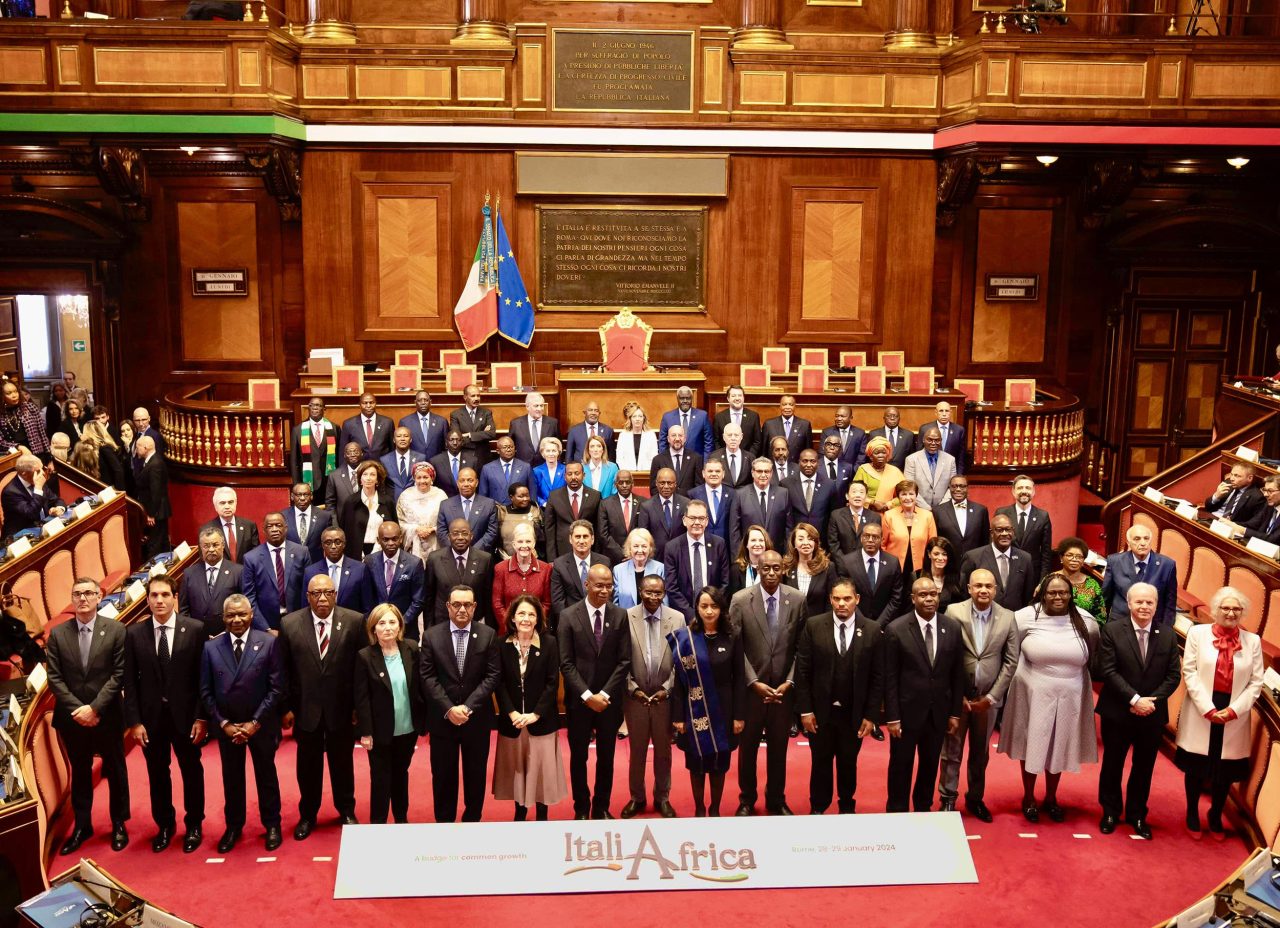
The Italian government officially presented the Mattei Plan on January 29 during the Italy-Africa Conference in Rome. The initiative represents one of the flagship international strategies of Prime Minister Giorgia Meloni, with a strong focus on energy cooperation, agriculture, education, water and health across Africa.
At the centre of the strategy is a broader geopolitical ambition: transforming Italy into a natural energy hub connecting Africa and Europe. The “water and energy” chapter is therefore one of the most strategic pillars of the programme, particularly as Europe seeks to diversify energy supplies and strengthen long-term partnerships with African countries.
The plan initially allocates €5.5 billion through a combination of loans, grants and guarantees. According to the Italian government, roughly €3 billion will come from Italy’s Climate Fund, while another €2.5 billion will be redirected from development cooperation resources.
A partnership model inspired by Enrico Mattei
The initiative takes its name from Enrico Mattei, the historic architect behind Italy’s post-war energy diplomacy in Africa and the Middle East.
According to Meloni, the Mattei Plan aims to establish a “non-predatory” partnership with African nations, based on cooperation “between equals” rather than charity-driven models traditionally associated with development aid.
The Italian government argues that the strategy could help reposition Italy among Europe’s leading geopolitical actors while strengthening ties between Europe and Africa. The approach also aligns closely with the EU’s broader infrastructure and energy strategy for Africa under the European Global Gateway programme.
During the Rome conference, Ursula von der Leyen described the Mattei Plan as fully complementary to the EU Global Gateway initiative, which foresees up to €150 billion in investments across Africa.
Where the €5.5 billion will go
The Mattei Plan focuses on five priority sectors:
Education and training
Italy plans to support educational infrastructure projects, including school redevelopment initiatives in Tunisia. Some of these activities are already linked to ongoing programmes involving renewable energy installations in schools.
Health
Healthcare is included among the strategic pillars, although few operational details have been publicly disclosed so far.
Agriculture and food security
Food security projects currently appear heavily concentrated in North Africa. Proposed interventions include:
- satellite monitoring systems for agriculture in Algeria,
- agro-food development projects in Mozambique,
- support for wheat, soy, maize and sunflower production in Egypt,
- irrigation and water treatment projects in Tunisia.
Several of these initiatives were already launched through existing Italian cooperation frameworks or by energy company Eni.
Water and energy
Energy remains one of the most politically relevant pillars of the plan.
One of the projects mentioned by Meloni concerns the development of a biofuel supply chain in Kenya, potentially involving up to 400,000 farmers by 2027. However, the project appears closely linked to an existing Eni programme already active in the country since 2021.
The Italian government also referenced major infrastructure connections between North Africa and Europe, including:
- the ELMED electricity interconnection between Italy and Tunisia,
- the South H2 Corridor for hydrogen transport from North Africa to Central Europe via Italy.
These projects are considered strategically important both for European energy security and for the expansion of renewable energy infrastructure across the Mediterranean region, an increasingly relevant topic also for several African economies investing in green hydrogen and clean energy exports.
Criticism and open questions
Despite the political visibility of the announcement, many operational details remain unclear.
One major criticism concerns funding sources. The government did not announce substantial new financial resources, but rather redirected existing funds, particularly from Italy’s Climate Fund established after COP26.
According to current estimates, more than 70% of the Climate Fund’s planned resources until 2026 could be absorbed by the Mattei Plan. Critics argue this may weaken Italy’s climate finance commitments rather than expand them.
Another unresolved issue is transparency. The full text of the Mattei Plan has not yet been made public, making it difficult to evaluate timelines, governance mechanisms, partner selection criteria and measurable outcomes.
At this stage, many of the projects presented appear to be existing initiatives rebranded under a broader geopolitical framework rather than entirely new investments.