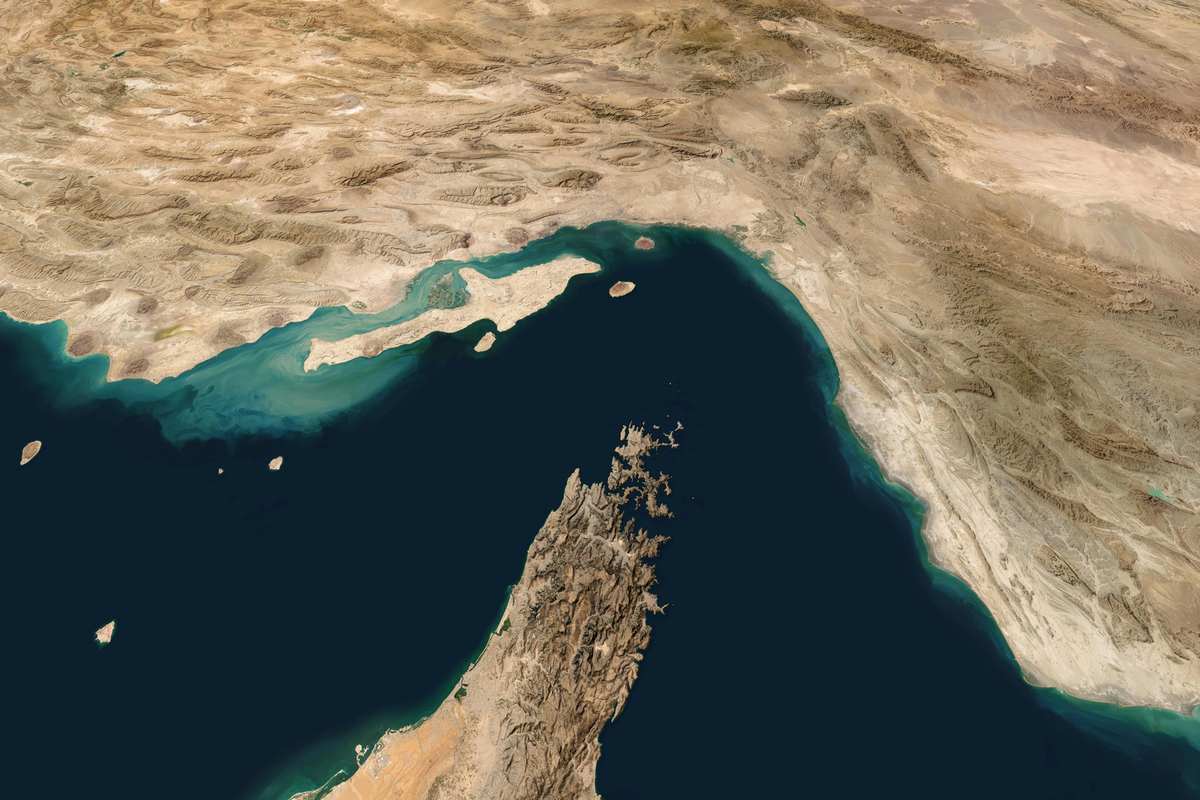
Three possible scenarios for a Hormuz Strait closure
The closure of the Hormuz Strait remains a major risk factor for global energy markets. Following comments by Donald Trump, who over the weekend announced that a peace agreement with Iran was “largely negotiated”, both Washington and Tehran have since downplayed the likelihood of a rapid end to the conflict.
According to an analysis by Wood Mackenzie, a prolonged disruption of shipping through the Strait could push oil prices as high as USD 200 per barrel. The European Commission also warned in its Spring 2026 Economic Forecast that a longer conflict in the Middle East and a persistent energy crisis could weaken European growth and fuel inflationary pressures.
Worst-case scenario: prolonged closure and global energy shock
The most severe scenario assumes a prolonged closure of the Strait, regional military escalation, and major disruptions to Gulf energy exports. Under this assumption, the waterway would remain closed until the end of 2026, with the risk of renewed conflict causing further supply interruptions.
Wood Mackenzie estimates that:
- Brent crude could reach USD 200 per barrel by the end of 2026 despite weaker demand.
- More than 11 million barrels per day of crude oil and condensates could remain stranded.
- Diesel and jet fuel prices could approach USD 300 per barrel in major refining hubs by year-end.
- The global economy could contract by up to 0.4% in 2026, marking the third global recession of this century.
- Oil and gas importing countries could accelerate electrification efforts to reduce dependence on imported fossil fuels.
Regional economic impacts would be severe and uneven. The Middle East could experience a GDP contraction of 10.7% in 2026. The European Union’s GDP could decline by 1.5% in 2026 and 0.5% in 2027. U.S. economic growth would fall below 1% in both years, while China’s growth would slow to 3% in 2026.
“Long-term prospects point to structurally weaker oil prices than our pre-conflict base case if importing countries accelerate efforts to reduce dependence on oil,” said Alan Gelder, Senior Vice President for Refining, Chemicals & Oil Markets at Wood Mackenzie.
“If electrification advances more rapidly and oil imports are replaced, this would place additional downward pressure on prices, with Brent potentially USD 10 per barrel lower than in the rapid peace scenario over the medium to long term. However, this outlook depends on both the pace of the energy transition and the higher energy costs faced by oil-importing economies seeking to reduce hydrocarbon dependence.”
Rapid peace scenario
In the most optimistic scenario, an acceptable peace agreement is reached quickly and the Strait reopens by June. Even in this case, the global economy would not return to pre-war conditions before the fourth quarter of 2026.
Oil prices would fall sharply after an agreement, with Brent declining to around USD 80 per barrel by the end of 2026 and potentially USD 65 per barrel in 2027. Global oil markets would return to oversupply conditions.
Global GDP growth would slow from 3% in 2025 to 2.3% in 2026, while the Middle East could still face recessionary pressures.
Intermediate scenario: agreement reached by late summer
This scenario assumes the ceasefire holds but negotiations continue until the end of summer, leaving the Strait largely closed until September.
Oil and LNG supply shortages would persist throughout the third quarter of 2026, leading to a mild global recession during the second half of the year. Global GDP growth would fall below 2% in 2026, creating modest but lasting economic consequences.
LNG markets face structural change
Wood Mackenzie argues that global LNG markets would face varying degrees of disruption under each scenario, with the prolonged disruption case presenting the most severe outlook.
Under this assumption:
- Part of the Gulf’s current 85 million tonnes per year of LNG supply could be lost permanently.
- An additional 75 million tonnes per year of LNG capacity currently under construction could face delays of several years.
- Global LNG supply could be, on average, 70 million tonnes per year below pre-conflict expectations.
“Persistent supply uncertainty would accelerate efforts to diversify energy systems by reducing dependence on imported LNG, supporting coal resilience and faster growth in renewables and electrification across Asia and Europe,” said Massimo Di Odoardo, Vice President of Gas and LNG Research at Wood Mackenzie.
“LNG prices would remain elevated through 2030, supporting investment in new LNG projects outside the Gulf, but weaker long-term demand could undermine future sector prospects.”
Even under the rapid peace scenario, pressure on LNG markets would continue until summer 2027 as Gulf export facilities gradually recover. Project delays would slow regional supply growth.
Wood Mackenzie expects that cancellations of U.S. LNG cargoes may be required to rebalance the market. European TTF gas prices could fall to around USD 14 per million BTU in the early 2030s, nearly half 2026 levels, before rising again toward 2035.
A more fragmented global energy system
Beyond immediate supply impacts, Wood Mackenzie suggests that a prolonged conflict could accelerate structural changes in global energy markets.
Even after the Strait reopens, intermittent disruptions could continue, reinforcing geopolitical risks linked to oil and LNG trade flows. The result would likely be greater price volatility and stronger pressure on import-dependent economies to enhance energy security.
In the prolonged disruption scenario, European and Asian countries would intensify efforts to reduce hydrocarbon dependence through faster electrification and renewable energy deployment, a trend that could also influence energy transition strategies across parts of Africa seeking greater energy security and reduced exposure to global fuel price shocks.
“The consequences of a prolonged disruption would extend far beyond energy markets,” concluded Peter Martin. “It would simultaneously test the resilience of global trade and industrial supply chains, reinforcing the urgency of finding a solution.”
What would happen to energy prices in Europe?
Energy prices have remained highly volatile since the conflict began in the Middle East. A broader and more persistent supply disruption than currently anticipated would not only affect oil and gas markets but would also weaken global growth, slow trade, and increase risk premiums.
According to the European Commission, gas markets would remain under pressure longer than oil markets. The main impact on Europe would come from higher global LNG prices, driven by increased competition with Asian buyers seeking available cargoes.
Seasonal factors would further amplify tensions, including stronger winter demand for heating and power generation. Continued restrictions on shipping through the Hormuz Strait would delay the normalization of global LNG flows.
As a result, European gas prices could rise toward €80 per megawatt-hour by the end of 2026 before gradually easing during 2027.