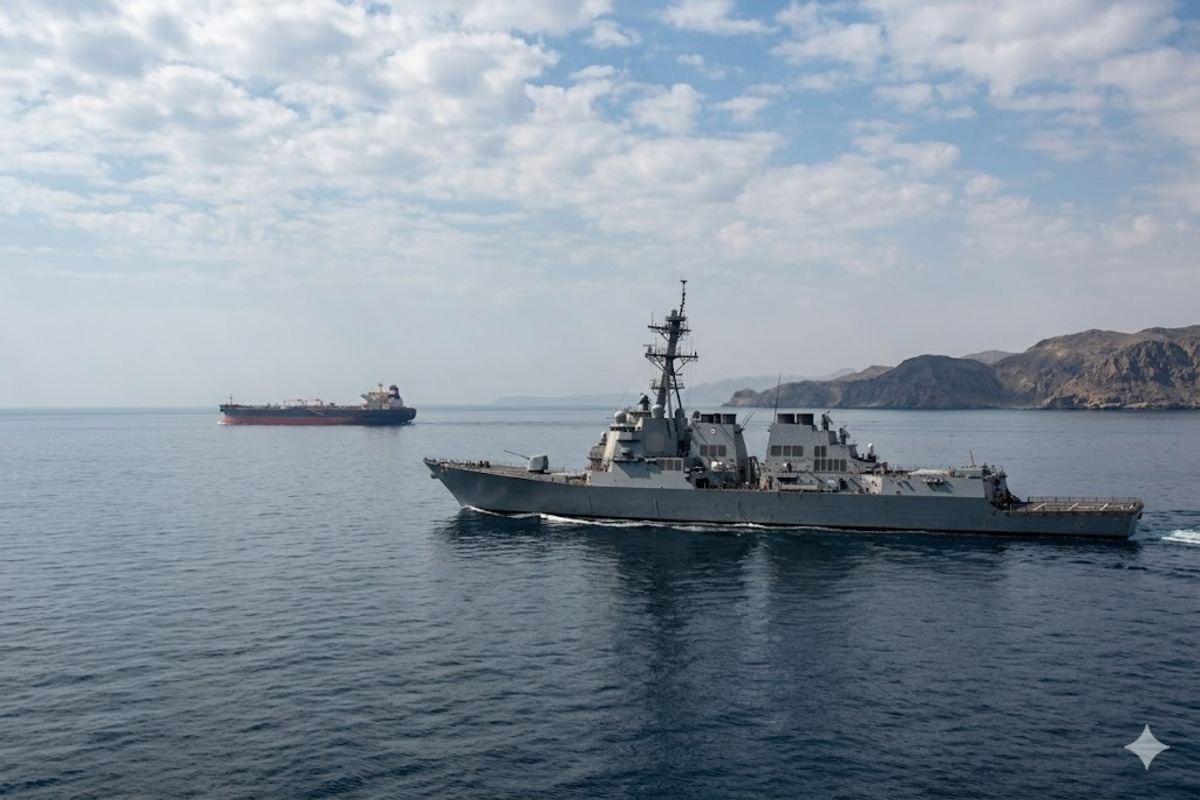
What a Hormuz Strait blockade would mean for global oil flows
The United States military has announced it will block maritime traffic to and from Iranian ports starting Monday, April 13 at 4 p.m. Italian time, effectively stopping nearly two million barrels of Iranian oil per day from reaching global markets. With a potential Hormuz Strait blockade, the implications for oil markets are significant.
What has been announced
Following the failure of weekend talks in Islamabad between US and Iranian negotiators, on Sunday April 12 Donald Trump declared that the US Navy would begin intercepting any vessel attempting to enter or exit the Strait of Hormuz.
United States Central Command clarified that the blockade would apply only to ships coming from or heading to Iran, including all Iranian ports in the Persian Gulf and the Gulf of Oman. Freedom of navigation for vessels transiting to non-Iranian ports would not be restricted, although further operational details were not disclosed.
In response, Iran’s Revolutionary Guards warned that any military presence near the strait would be considered a violation of the ceasefire. Tehran signaled it could open fire on ships in the Gulf or target infrastructure in Gulf states hosting US forces.
Iran has long used control of the strait as political leverage. While allowing some vessels to pass, potentially in exchange for fees, it has also threatened to mine the waterway. Some Iranian lawmakers even proposed a transit toll of two million dollars per vessel, possibly involving Oman.
A strategy to cut Iran out of oil markets
Blocking Iranian shipments would remove a major oil supply source from global markets. According to Kpler, Iran exported 1.84 million barrels per day in March 2026 and 1.71 million so far in April, above its 2025 average of 1.68 million bpd.
Before the escalation on February 28, Iran had loaded near-record volumes onto tankers, with more than 180 million barrels stored at sea at the beginning of April.
A US blockade would likely prevent Iranian vessels, which had continued transiting the Strait of Hormuz despite the conflict, from doing so. The objective appears to be to disrupt Iran’s oil export model. Meanwhile, other vessels stranded at sea or in ports could attempt to resume deliveries along alternative routes.
The announcement marks a shift in US strategy. Despite military strikes, Washington had previously allowed Iranian oil flows to continue to limit pressure on global energy prices, even temporarily easing sanctions to permit exports.
How the US naval blockade would work
The strategy aims to deprive Iran of leverage and reopen the strait to global trade as quickly as possible, potentially stabilizing oil prices.
However, US forces have not specified how many warships would be deployed, whether air support would be involved, or if Gulf allies would participate.
According to several analysts, direct attacks on tankers are unlikely due to the risk of environmental disasters. A more plausible approach would involve forcing vessels to change course through threats and naval presence.
If that fails, armed boarding teams could be deployed to take control of ships.
“Trump wants a quick solution. The reality is that this mission is difficult to execute alone and likely unsustainable in the medium to long term,” said Dana Stroul, former Pentagon official during the Biden administration, now at the Washington Institute for Near East Policy.
What it means for oil flows through the Strait
Under normal conditions, nearly 150 vessels transit the Strait of Hormuz daily. In March, however, due to the Middle East conflict, just over 150 vessels crossed the strait over the entire month, according to S&P Global Market Intelligence.
Ships that managed to pass likely reached agreements with Iranian authorities and may have paid transit fees, according to maritime intelligence assessments.
Traffic remains heavily constrained despite the ceasefire agreement between Washington and Tehran. As of April 7, nearly 187 loaded tankers were in the Gulf, carrying around 172 million barrels of crude and refined products, again based on Kpler data.
Analysts note that tanker traffic from Gulf states will not immediately return to pre-war levels, as damaged energy infrastructure still requires time to be repaired.
For regions highly dependent on imported fuels, including several African economies, prolonged disruption in Hormuz could translate into higher energy costs and increased supply volatility.