Building bridges for Africa’s sustainable energy transition
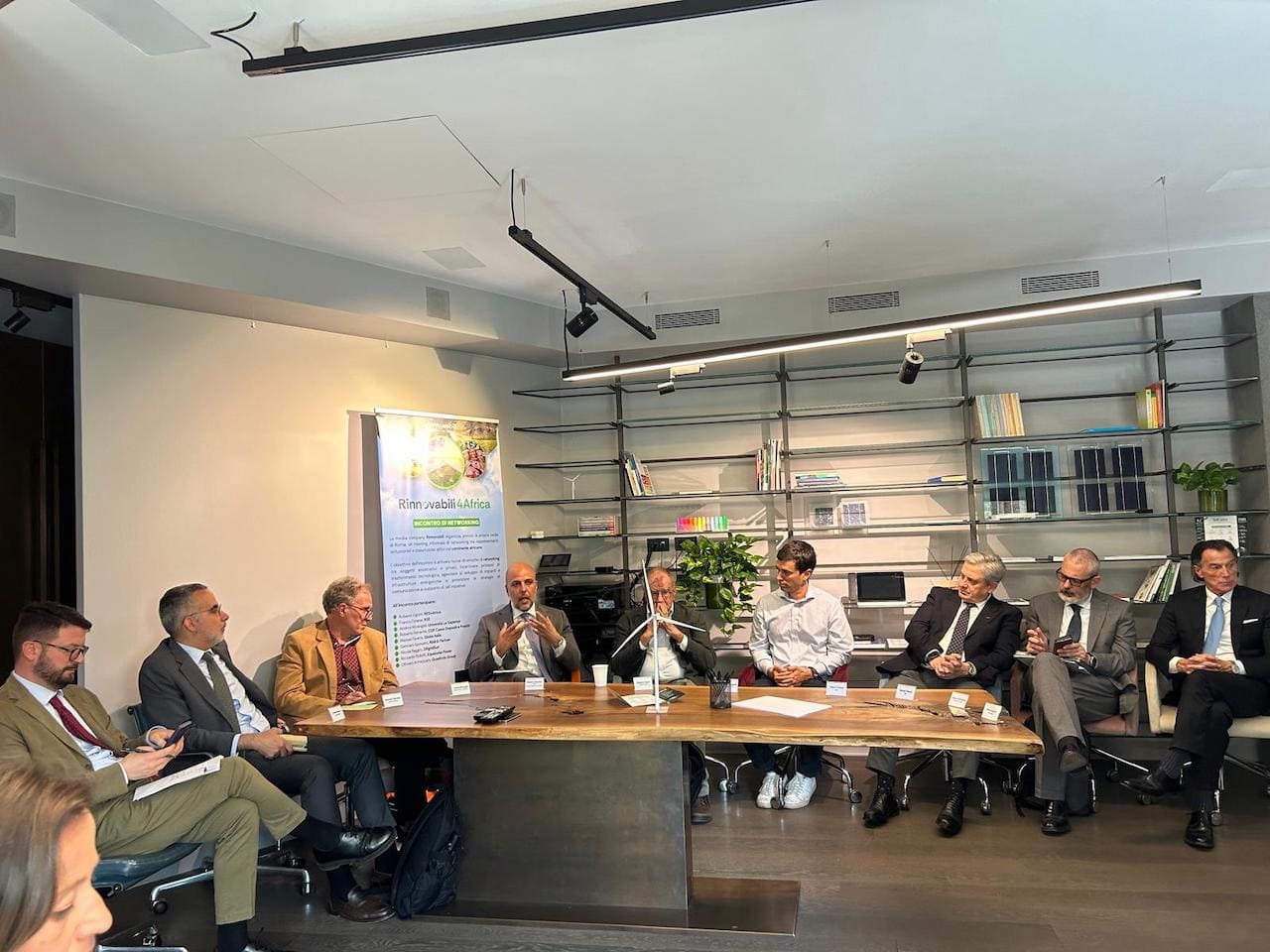
Set in the historic surroundings of Via Margutta in Rome, the first Rinnovabili4Africa event marked the launch of a new networking platform promoted by the media company Rinnovabili. The initiative aims to build a bridge between associations, companies, public institutions and universities engaged in Africa’s energy and sustainability transition.
“A unique moment to create shared synergies,” said Matteo Spagnolo, CEO of Rinnovabili. “Talking about energy transition in Africa is essential. It is a continent with a rapidly growing population, rich in resources, yet still facing serious challenges in access to energy. This event was created to stimulate concrete collaborations and to better communicate what is already happening across Africa.”
Rödl & Partner, integrated advisory services for geothermal and energy transition in Africa
The first speaker at the Rinnovabili4Africa networking event was Gennaro Sposato, lawyer at the German-based firm Rödl & Partner.
“Energy transition is part of our DNA. We are active in Kenya and South Africa and support many European companies developing renewable projects across the continent.”
Sposato explained that Rödl & Partner supports companies through an integrated approach, combining legal and tax advisory services with technical due diligence, thanks to a team that includes engineers and energy economists.
In particular, the firm is involved in the Geothermal Risk Mitigation Facility (GRMF), a programme funded by German public resources and international organisations to support geothermal development in Africa, both for electricity generation and heat. “We work with public and private stakeholders, Italian and international, to facilitate access to these renewable resources. It is still an underutilised sector despite its enormous local potential.”
According to Sposato, supporting investment is not enough without ensuring transparency, compliance and sustainability standards. “Africa today represents a concrete frontier where these skills can be applied and make a real difference.”
Sapienza University, education, microgrids and startups for Africa
Andrea Micangeli, professor at Sapienza University of Rome, presented the experience of the Microgrid Academy, a project developed with RES4Africa and Strathmore University in Kenya. With more than 30 professional training courses already launched, the programme focuses on microgrids and energy access. The university’s commitment is structured around three pillars: education, research and technology transfer.
“From teaching comes service learning. Students install real systems in the most vulnerable contexts. Some startups born from these experiences are now deploying systems of tens of megawatts in five African countries.”
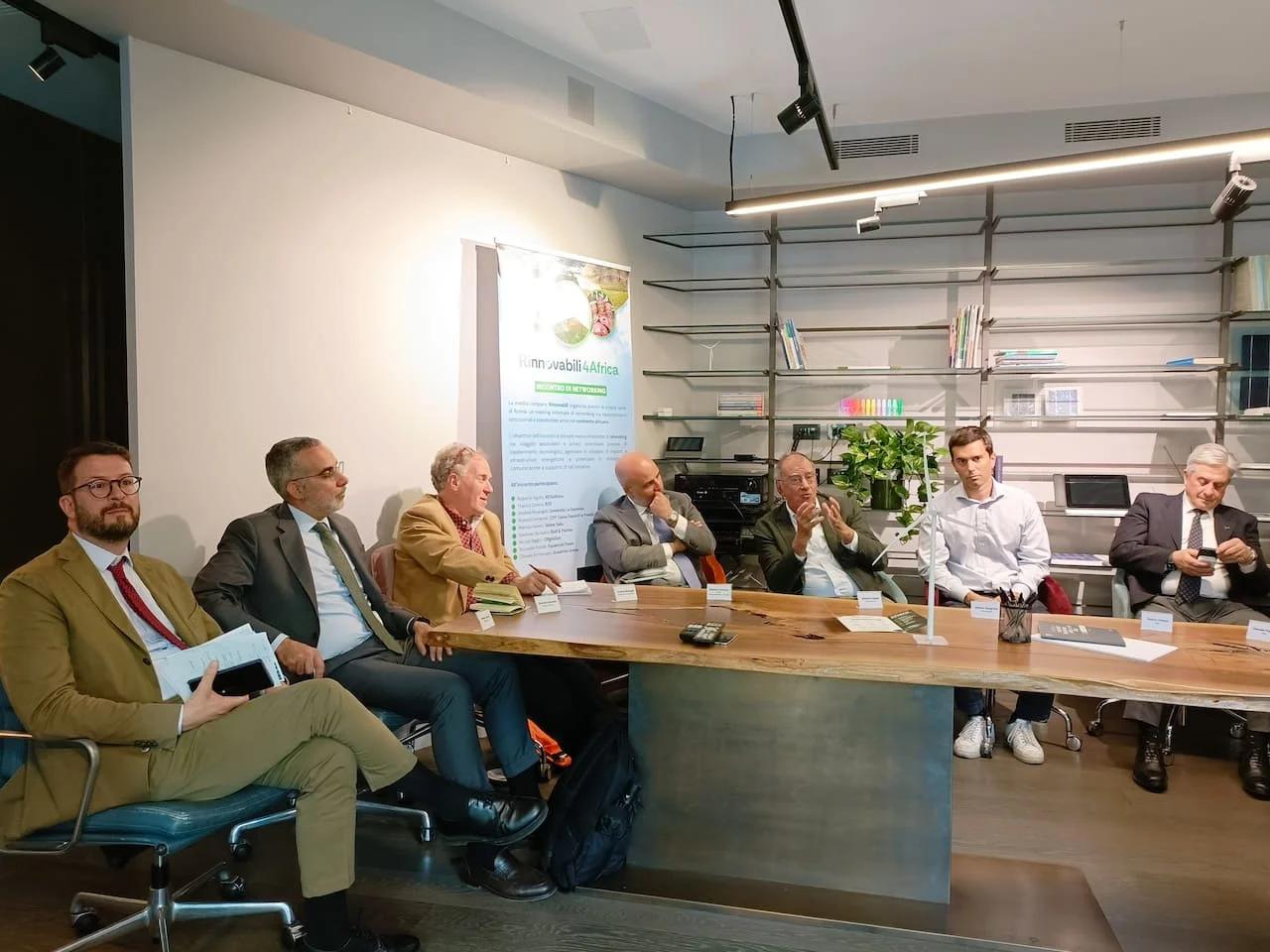
Micangeli also mentioned the Grand Challenges Scholars Program, an international initiative involving more than 70 universities worldwide working on energy and development challenges. “In 2026 we will host an important international event in Rome, another opportunity to connect Italian and African expertise.”
CDP and Rinnovabili4Africa, financial tools and capacity building for the transition
Roberto Ferrante, head of the Natural Resources and Circular Economy Energy Competence Center at Cassa Depositi e Prestiti (CDP), outlined CDP’s strategic role in supporting Africa’s energy transition.
“CDP is often seen only as a financial institution, but today we rely on more than 100 engineers and economists who support strategic decisions, including at international level,” Ferrante said. “On behalf of the Ministry of Environment and Energy Security, we manage the Italian Climate Fund, endowed with four billion euro, alongside other international development instruments, for a total of more than twenty-five billion euro that can be mobilised in the medium term.”
Ferrante stressed the importance of additionality. “We intervene where the market alone cannot, helping to close technical and financial gaps.” CDP is already involved in green hydrogen projects in Egypt and in biofuels initiatives, working with partners such as ENI.
A strong focus is placed on capacity building. “Often the biggest gap is not financial, but technical and linguistic. We support African governments in structuring projects aligned with international standards, with measurable environmental and social impacts. Our support goes beyond financing and accompanies projects at every stage.” Ferrante concluded by reaffirming that impact measurability is a core requirement for every CDP investment.
RES4Africa, accelerators, local startups and the Mattei Plan
“We are active in thirty African countries, with four strategic pillars: regulation, risk investments, capacity building and startup support,” said Roberto Vigotti, Secretary General of RES4Africa Foundation.
RES4Africa works to promote regulatory frameworks that enable renewable investment, aware that “without clear and stable policies, private capital rarely moves.” Alongside regulatory support, Vigotti highlighted the importance of de-risking instruments and the growing commitment to training and entrepreneurship.
This aspect was further developed by Giovanni Formicola, Youth and Innovation Specialist at the Foundation, who described the evolution of RES4Africa’s startup support activities. “At COP27 we launched a full accelerator for African renewable energy startups. This year we received more than four hundred applications, up forty percent compared to the previous year. Selected startups operate across a wide range of areas, from clean cooking to the circular economy.”
“The real challenge today is not only promoting renewables, but electrifying Africa in all its dimensions, from rural and peri-urban areas to industrial digitalisation,” Vigotti said. As part of the Mattei Plan, RES4Africa has been mandated to develop projects in Morocco, Kenya and South Africa. “The goal is to create real technical training hubs and platforms for know-how transfer.”
RSE and Albedo for Africa, Italian innovation linking energy, agriculture and carbon credits
Franco Cotana, full professor at the University of Perugia and current CEO of RSE, presented an overview of the most innovative projects underway, highlighting the contribution Italian research can offer to African countries.
Cotana described the evolution of research on programmable renewable energy, particularly in biomass and geothermal sectors, and underlined RSE’s role in mapping energy potential through national solar, wind, hydro and geothermal atlases, key tools also for international cooperation.
Among the most promising initiatives is Albedo for Africa, developed in collaboration with the Italian Space Agency and recognised by the United Nations. Already tested in southern Italy and now expanding to Tunisia and Algeria, the project uses reflective membranes to reduce soil overheating, increase agricultural productivity and generate satellite-measured carbon credits.
“With simple and replicable technologies, we can ensure energy, food and development for local communities. We have shown that reflected kilowatt-hours can be converted into carbon credits on the voluntary market,” Cotana said.
RSE is also involved in biomass studies aimed at sustainable aviation fuels and in projects such as the Lobito Corridor, a railway infrastructure that could reshape global supply chains for critical raw materials.
Strengthening Italian industry in African markets
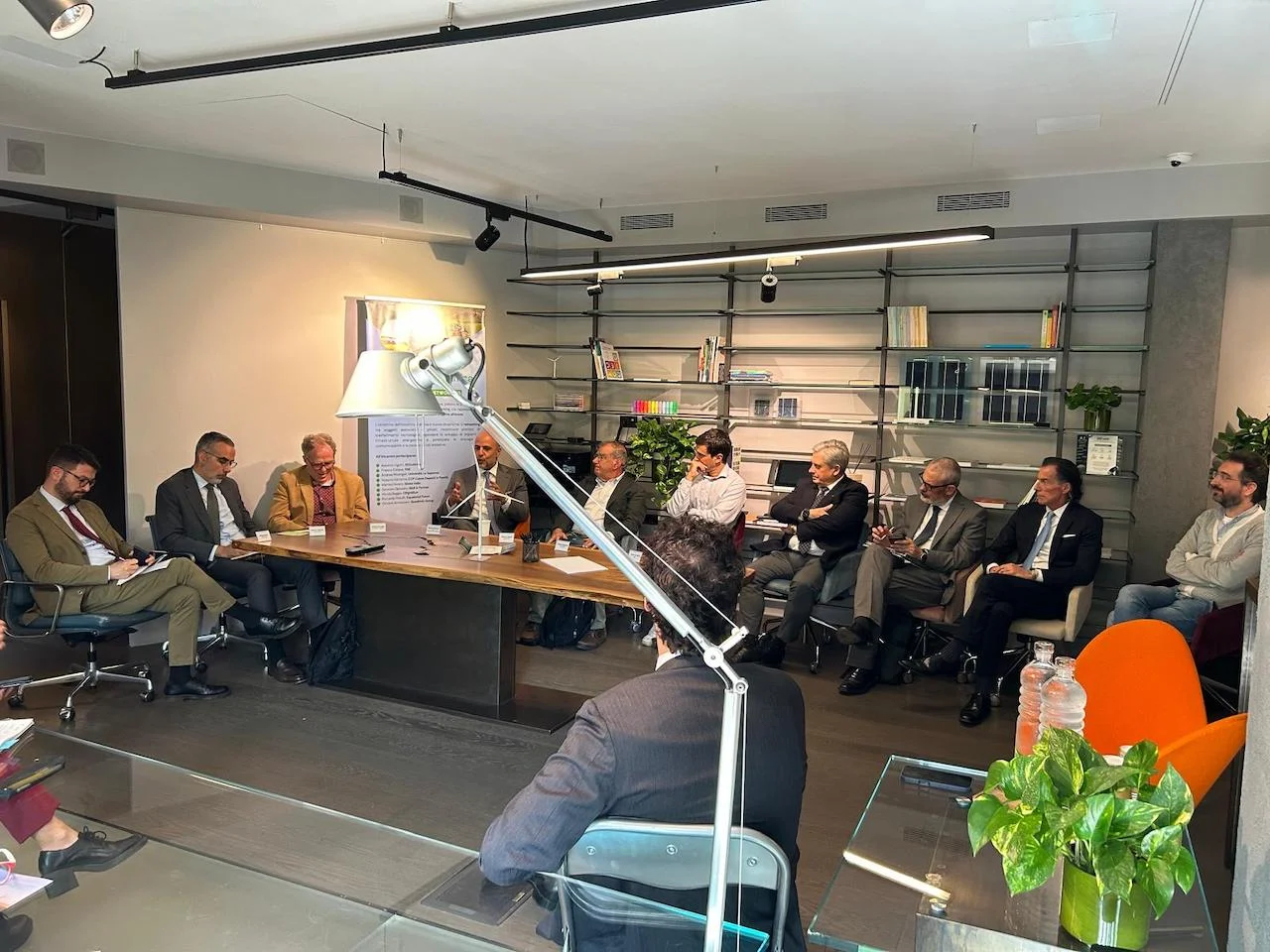
Oliviero Armezzani, co-founder of Convert, announced the launch of a new industrial initiative to strengthen the Italian photovoltaic supply chain in African markets. The project involves acquiring a major Italian solar tracker manufacturer, with the aim of consolidating Italy’s presence in countries such as Morocco, Algeria, Zambia, Ghana and South Africa.
“We do not want to be just suppliers, but industrial partners in African infrastructure projects. Italian companies have the know-how to contribute directly on the ground,” Armezzani said, highlighting the value of Italian manufacturing in large-scale energy developments. The initiative aligns fully with the Rinnovabili4Africa vision, which seeks to strengthen South-North cooperation through strategic industrial partnerships.
OffgridSun, carbon credits as a tool for African communities
Nicola Baggio, founder of FuturaSun and co-founder of OffgridSun, shared his twenty years of experience developing photovoltaic projects in Africa, ranging from household solar kits to solar-powered water systems serving entire communities.
“We have implemented systems in several countries for schools, hospitals and agricultural users. The approach has always been to adapt to local contexts and respond to concrete needs.”
Today, OffgridSun is also active in carbon credits, which Baggio described as one of the most effective private finance tools for Africa. “Carbon credits are the only instrument that, in our experience, can fully cover project costs without relying on public funds. In Kenya, for example, one of our solar water systems provides drinking water to more than fifty thousand people thanks to the monetisation of generated credits.”
Beyond energy, OffgridSun works in clean cooking, producing and distributing low-wood-consumption stoves locally. “These are simple solutions with very high social impact. In Tanzania people queue to receive them. We are also helping small African enterprises scale these technologies, supporting local entrepreneurship,” Baggio concluded.
Globe Italia, green diplomacy as a driver of Italian projects in Africa
Matteo Favero of Globe Italia, the parliamentary intergroup on sustainability, outlined Italy’s institutional commitment to cooperation with Africa in sustainability. “With the Africa Act in 2016, we placed Africa at the centre of the parliamentary agenda, promoting projects on energy, health and water access.”
Favero highlighted the role of Italian green diplomacy, citing projects implemented with Globe, including energy efficiency upgrades in hospitals in Ethiopia and Angola, as well as initiatives on water sanitation, clean cooking and sustainable agriculture, in cooperation with African universities.
Looking ahead, Favero announced new initiatives aligned with the evolution of the Mattei Plan, aiming for stronger integration between Italian institutions, SMEs and public finance. Among the ideas under development is a dedicated exhibition pavilion showcasing Italian projects in Africa at a major renewable energy trade fair.
A media partner for Africa, the role of Rinnovabili4Africa
Closing the event, Rinnovabili editor-in-chief Mauro Spagnolo reaffirmed the media company’s commitment. “With Rinnovabili4Africa, we want to fill a communication gap and create a stable space for those working on Africa’s energy transition.”
The goal is to develop Rinnovabili4Africa into an Italian information and networking hub, able to showcase best practices and foster new connections between public and private stakeholders.
The first step has been taken. Africa is finally entering the national debate on energy transition not only as a recipient of aid, but as a strategic partner for innovation, entrepreneurship and global sustainability.