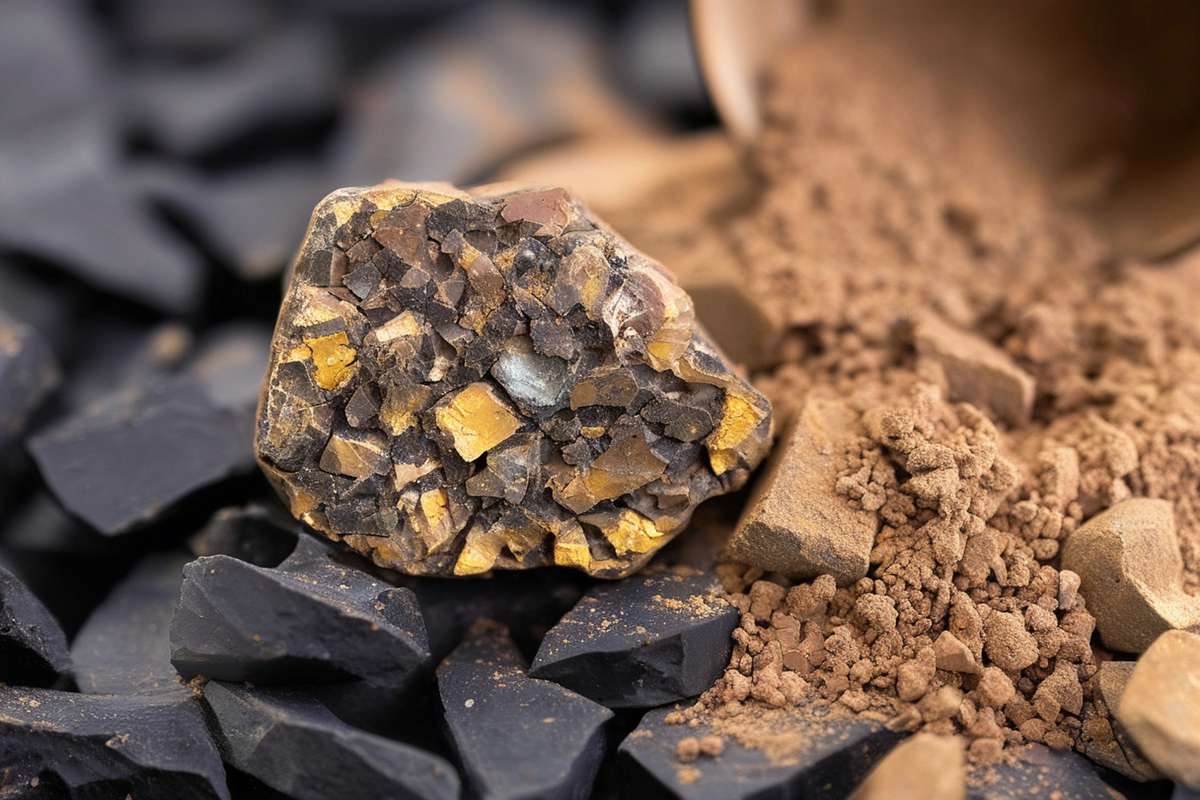
Africa holds some of the world’s largest known critical mineral deposits
Africa was already experiencing an investment boom before the United States and Israel went to war with Iran earlier this year. The conflict has highlighted the political and economic costs of dependence on the Middle East for oil, fertilisers and global trade routes.
Against this backdrop, the African continent is attracting increasing amounts of capital from around the world. Investors are particularly interested in critical minerals, as Africa holds some of the world’s largest known deposits of resources essential for clean energy development and the hardware powering artificial intelligence. These include manganese, platinum group metals, cobalt and graphite.
According to the International Energy Agency (IEA), USD 600 billion in new capital investment could be needed by 2040 to meet growing global demand for critical minerals. Africa therefore represents a significant investment opportunity.
How much are Africa’s mineral resources worth?
Africa’s mineral resources are estimated to be worth USD 29.5 trillion, equivalent to almost one-fifth of the global total. Of this amount, USD 8.6 trillion remains untapped, according to the Africa Finance Corporation.
Bloomberg’s annual 2026 Investor’s Guide to Africa highlights how several African countries are offering investors tax incentives, customs duty exemptions on equipment, royalty concessions and benefits linked to special economic zones.
These incentives are increasingly tied to local mineral processing and refining, reflecting a growing emphasis on developing mineral value chains within African economies.
Companies investing in the sector include Lloyds Metals and Energy, KoBold Metals, Orion CMC, Unicorn Mineral Resources and Virtus Minerals.
However, Bloomberg also identifies several investment risks, including export restrictions, unreliable electricity supplies, transport bottlenecks and frequent changes to mining and tax regulations.
Other challenges include China’s dominant position in Africa’s mining sector and the volatility of global commodity prices.
Bloomberg’s 2026 guide identifies several African countries attracting particular investor interest based on their mineral resources.
Zambia stands out for copper, while the Democratic Republic of the Congo and Namibia are attracting attention for lithium.
Tanzania and Mozambique are drawing interest for their graphite resources, while South Africa and Angola are being watched for their rare earth deposits.
Meanwhile, Morocco, the only African country with a free trade agreement with the United States, is considered a market to watch for phosphate and manganese.