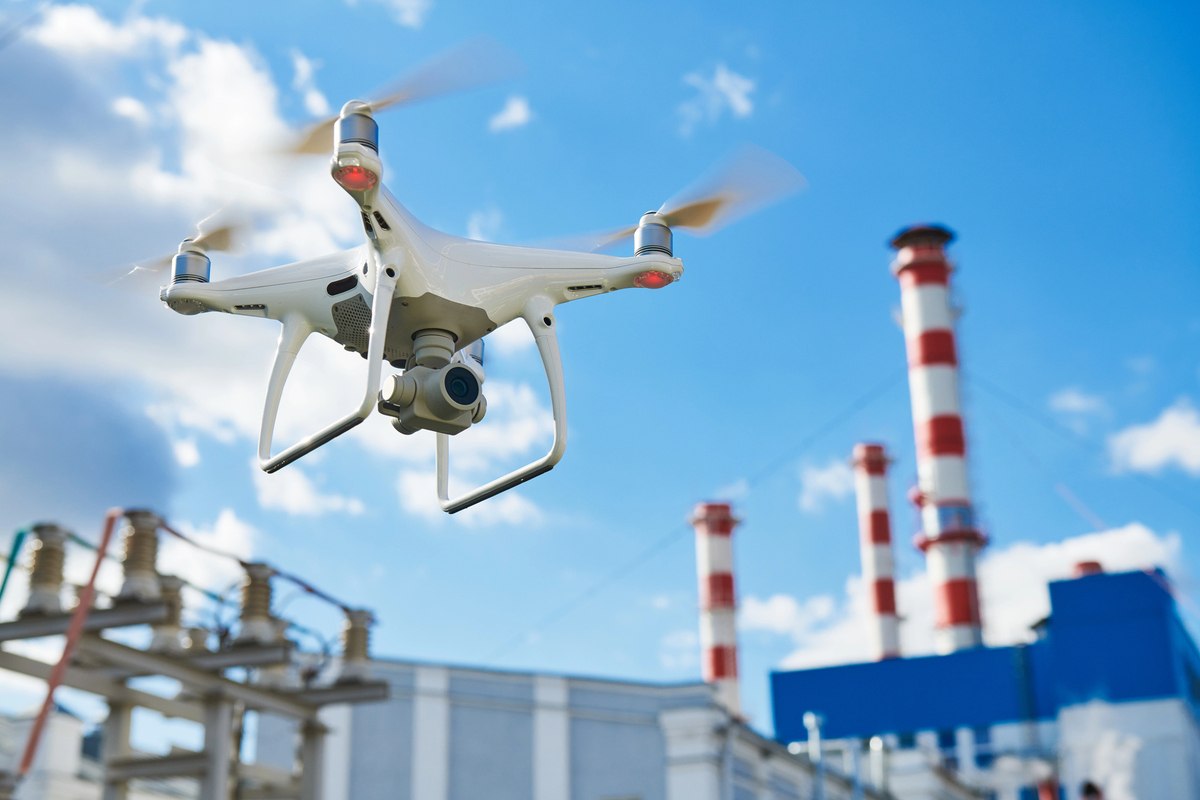
Drone attacks on energy infrastructure are changing modern warfare
The relationship between drone attacks on energy infrastructure and energy security is forcing governments to rethink how critical assets are protected. Modern warfare, increasingly driven by low-cost drones and missiles, has made energy infrastructure more vulnerable than ever. Pipelines, gas networks, refineries and LNG terminals occupy fixed, well-known locations, making them attractive military targets. The sabotage of the Nord Stream pipelines in September 2022 highlighted just how exposed strategic energy assets can be.
Ukraine shows how drones can reshape the battlefield
Since the beginning of the war in Ukraine, Russia has used drones to target the country’s energy supply. Ukraine responded by striking Russian power plants, fuel storage facilities and oil refineries.
By targeting Russian energy infrastructure, Ukraine has demonstrated its growing expertise in long-range drone operations. In recent months, Kyiv has repeatedly struck refineries, fuel depots and energy facilities deep inside Russian territory. These operations disrupted fuel supplies and showed that strategic infrastructure can become vulnerable even when located far from the front line.
Iran demonstrates the vulnerability of maritime energy routes
Since late February 2026, Tehran has repeatedly relied on drones and other asymmetric tactics to disrupt maritime traffic through the Strait of Hormuz. The attacks demonstrated that closing one of the world’s most important energy chokepoints does not necessarily require naval superiority. Instead, drones costing only a few hundred or a few thousand dollars proved capable of disrupting commercial shipping.
Iranian forces were able to strike targets across the Gulf region. Perhaps the most significant lesson from these attacks is that inexpensive drones and missiles make defending energy infrastructure increasingly difficult. Traditional air defense and missile interception systems are extremely expensive and can be overwhelmed through saturation tactics, launching enough drones or missiles that defenses cannot intercept them all. In many cases, only a handful of successful strikes are needed to disable critical infrastructure.
Protective measures could include physical barriers such as anti-drone nets, although these offer little protection against missiles, or fixed electronic warfare systems capable of jamming drone guidance systems.
New pipelines also create new security risks
Oil and gas pipelines are particularly difficult to defend against asymmetric threats because they stretch across vast territories while remaining fixed assets. They are also extremely expensive to rebuild after severe damage.
Even if political support exists, restoring a heavily damaged pipeline would require considerable time and investment. Gulf countries, including the United Arab Emirates, Saudi Arabia and Iraq, are developing alternative export routes to reduce dependence on the Strait of Hormuz. However, as several analyses, including one by Reuters, have pointed out, expanding overland energy networks simply creates additional targets and broadens the range of vulnerable infrastructure.
A more resilient strategy is to build energy systems that are smaller, more mobile and easier to replace.
Tatiana Mitrova, a researcher at Columbia University’s Center on Global Energy Policy, told Axios that energy infrastructure planning should be fundamentally reconsidered. More distributed energy networks may involve trade-offs in cost, but they are significantly more resilient. In response to Russian attacks on its electricity system, Ukraine has increasingly relied on locally available energy resources that can be deployed and relocated more easily. Solar power, in particular, becomes more resilient as generation is decentralized, making it better able to withstand widespread outages.
“For many decades, throughout the last century, the basic idea was geographical concentration and economies of scale,” Mitrova said. “Now, however, the larger the target, the greater the damage that can be inflicted. This gives priority to infrastructure that is more modular, smaller in scale, faster to build, cheaper to construct and easier to relocate.“
Why energy security strategies must evolve
A report by the Modern War Institute (MWI), The Drone Revolution That Isn’t, argues that drones still depend on large industrial supply chains, experience extremely high attrition rates and are already facing a “counter-revolution” driven by electronic warfare and jamming technologies.
Nevertheless, NATO members have recognized the scale of the threat and announced USD 40 billion in investments to strengthen counter-drone capabilities over the next five years.
The growing asymmetry between low-cost weapons and billion-dollar infrastructure requires a fundamental shift in energy security planning. According to the MWI, protecting economies and societies should rest on three core pillars.
Decentralized energy systems and microgrids
In regions exposed to armed conflict or hybrid threats, centralized energy systems have become a major vulnerability. If one large facility is disabled, entire regions can lose electricity or fuel supplies.
Distributed energy systems and local microgrids improve resilience because damage remains localized, allowing the rest of the network to continue operating. This approach is becoming increasingly relevant not only in Europe but also in parts of Africa, where resilient and decentralized energy systems are already viewed as an important component of long-term energy security.
Hardening critical infrastructure
Some strategic assets, including large power stations and transmission hubs, cannot realistically be decentralized for technical or economic reasons.
These facilities require stronger physical protection designed to stop drones before they reach sensitive equipment. Potential measures include blast walls to limit the impact of explosions, protective steel mesh around high-voltage transformers to intercept first-person-view (FPV) drones or munitions, and relocating critical transmission lines or control centers underground to reduce their exposure to aerial surveillance and direct attacks.
Stronger cooperation between the military and the energy sector
Repeated attacks on electricity networks and fuel infrastructure have demonstrated that protecting energy assets is now a matter of national security.
Energy companies and military organizations need to work more closely together, integrating both active and passive defense measures from the earliest stages of infrastructure planning. As drone warfare continues to evolve, energy resilience will increasingly depend not only on engineering, but also on security planning and strategic cooperation.