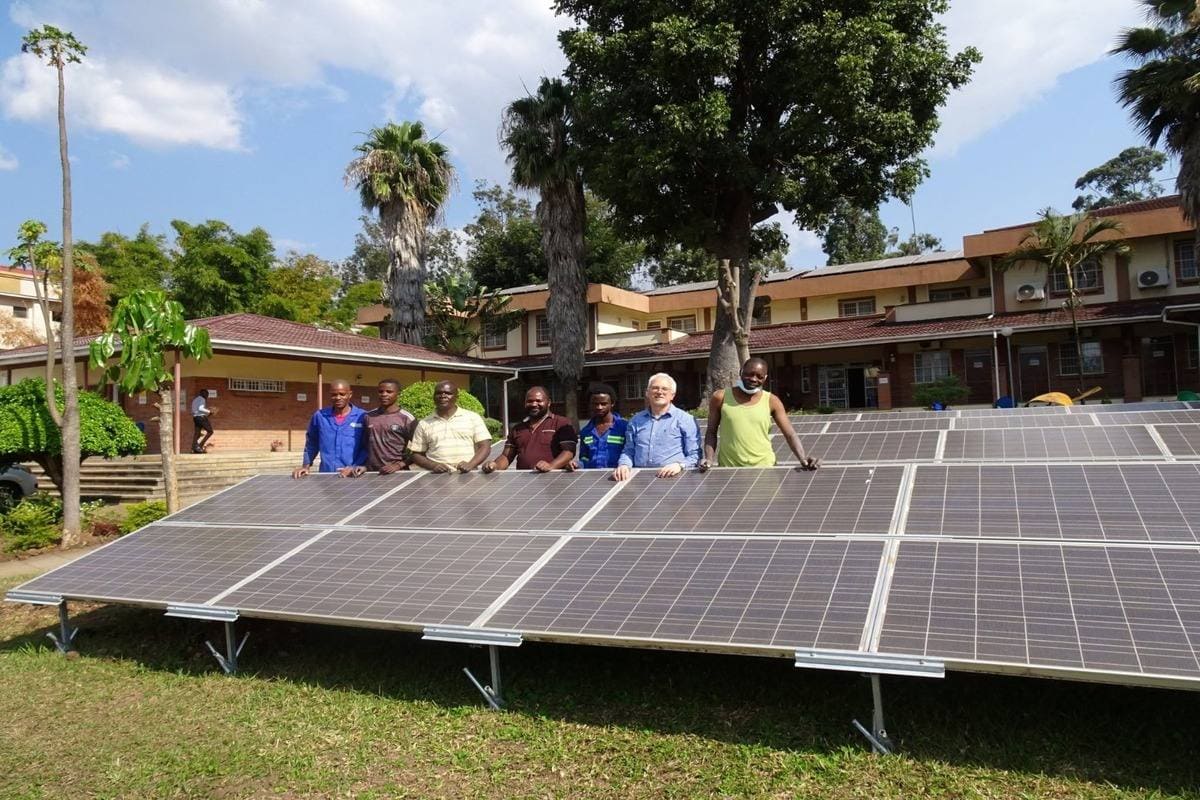
Healthcare in Africa depends on reliable electricity
Providing healthcare in Africa is, first and foremost, a matter of reliable and continuous electricity supply. Hospitals and primary healthcare centres face repeated power outages that put life-saving equipment, vaccine refrigeration and treatments for diseases such as AIDS at risk.
In this critical context, integrating renewable energy, particularly solar power, is a strategic investment. It not only stabilises electricity supply and protects complex, expensive equipment, but also reduces operating costs and opens the way for innovation in telemedicine and projects linked to Italy’s Mattei Plan.
Why primary healthcare facilities need renewable energy
Primary healthcare centres across Africa provide essential services, yet many face serious problems with electricity supply. Power interruptions can severely affect medical instruments and equipment, making them unusable, disrupting treatment and ultimately putting patients’ health at risk.
The figures illustrate the scale of the problem. According to a Sustainable Energy for All (SEforALL) report, almost 40% of Primary Healthcare Centres (PHCs) in Nigeria lack reliable access to electricity. Many facilities depend on expensive and polluting alternatives such as generators. Without reliable power, virtually every aspect of healthcare delivery can be affected.
In rural Africa, access to healthcare is therefore constrained not only by shortages of facilities or adequately trained staff, but also by a lack of reliable electricity. Frequent blackouts and poor power quality make it difficult to operate complex equipment properly.
Hospitals and clinics can struggle to run essential medical equipment, store vaccines and provide emergency services, laboratory diagnostics and safe childbirth. This is why expanding electrification through solar energy in Africa represents a strategic investment in healthcare resilience.
How renewable energy strengthens healthcare in rural Africa
Solar photovoltaic systems reduce dependence on fuel supplies. During emergencies, they can also allow healthcare workers to focus on patients rather than worrying about how to secure the electricity needed to provide treatment.
Generators require regular maintenance and involve continuous operating costs. Solar energy, by contrast, can reduce long-term energy costs while also cutting emissions.
Solar energy is transforming healthcare in Africa through better power quality
Solar energy is transforming healthcare in Africa, improving not only access to electricity but also the quality and reliability of the power supplied to medical facilities.
“For us, switching to solar energy was an environmental choice that also allowed us to achieve major savings,” Giorgio Barbaglia, technical manager of the DREAM programme run by the Community of Sant’Egidio, told Rinnovabili.
“In places where there was no electricity, or where the supply was too unstable, we had to use highly polluting and expensive diesel generators. Switching to solar had two effects: reducing emissions and cutting bills. From a strictly technical point of view, it also meant greatly improving the quality of the electricity supply.
In healthcare, power quality is extremely important because it allows testing and diagnostics to continue for longer, without the risk of having to stop the machines. After a breakdown, it was necessary to wait for a technician, who might arrive months later. This makes a particular difference for AIDS patients, who need molecular biology testing.”
Overvoltage, undervoltage and frequency fluctuations in the grid can also significantly shorten the lifespan of medical equipment and machinery.
Through international cooperation, many African hospitals have received sophisticated diagnostic equipment that has subsequently remained out of service after being damaged by poor electricity supply. To extend the lifespan of these machines, renewable energy offers an effective solution to the severe instability affecting many African electricity grids, helping prevent damaging voltage and frequency fluctuations.
Africa encompasses countries and regions with very different conditions. In general, however, the solar market has evolved, making it possible to install photovoltaic systems through local suppliers. Prices have fallen and quality has improved. As a result, quality products can now be found in African markets without necessarily having to import them.
Renewable energy can support medical teleconsultation
Without energy, even the most basic healthcare cannot be provided. Reliable electricity, however, also creates new opportunities. One of them is telemedicine.
Through teleconsultation, medical professionals can provide diagnoses that might otherwise be impossible. Teleconsultation connects two or more doctors, even through a simple video call, allowing them to discuss a patient’s clinical condition. Medical data, reports and images can also be shared.
Teleconsultation can help overcome geographical distances, significantly improving the quality of healthcare while supporting the training of local health professionals.
“The contribution of telemedicine is very important, even though very little is needed to make it work. Yet sometimes even that very little is not available,” said Michelangelo Bartolo, a doctor who has made telemedicine a mission.
Healthcare in Africa and the Mattei Plan: Italian international development initiatives
Africa manages around 25% of the world’s disease burden but imports 95% of pharmaceutical active ingredients and 70% of finished medicines, mainly from China and India. The continent is home to two-thirds of the world’s people living with HIV and almost one-quarter of people with tuberculosis. It also accounts for 95% of global malaria deaths, 597,000, most of them children under the age of five.
Investing in healthcare also has direct effects on productivity and GDP, according to a study by the Istituto Affari Internazionali titled The Mattei Plan and public-private partnerships for health in Africa.
In Ethiopia, for example, 20 years of efforts to combat AIDS, tuberculosis and malaria have reduced mortality by 65%, increased life expectancy from 51 to 67 years and helped GDP grow by around 20 times.
Health is one of the pillars of Italy’s Mattei Plan. The plan aims to improve access to and the quality of basic maternal and child healthcare services, tackle endemic infectious diseases and chronic non-communicable diseases, and prevent pandemics, while promoting the use of new technologies such as telemedicine.
Fondazione Artemisia, a non-profit organisation linked to Artemisia Lab, participates in the Mattei Plan’s international cooperation strategies through healthcare, clinical and social development projects.
Artemisia is involved in the “Ripartiamo” project in Kenya, developed with Dr Paolo Meo, through which paediatric medicines and basic healthcare have been provided. It also supports Ripartiamo APS in international health missions, contributing to direct healthcare assistance, prevention, access to medicines and technological innovation.
In Ethiopia, working with Professor Aldo Morrone, Artemisia focuses on training local staff through ongoing programmes for African doctors and healthcare professionals. In terms of infrastructure development, it also provides support for the construction and strengthening of hospitals and local healthcare facilities.