Green hydrogen, from ASTM purity standards to the challenges of saltwater
How pure does the water used in electrolysers for hydrogen production need to be? In commercial systems, whether based on PEM (Proton Exchange Membrane), alkaline or AEM (Anion Exchange Membrane) technology, the answer is always the same: very pure.
More technically, the water must meet specific ASTM D1193 standards, ASTM Type I for ultra-pure water and Type II for purified or demineralised water, which define the chemical and physical purity requirements for laboratories and high-tech industrial processes.
Otherwise, metals, minerals and salts dissolved in the water can damage the equipment, poisoning catalysts, causing deposits in channels or increasing electrical conductivity to the point of causing current leakage.
But with freshwater resources under increasing pressure and vast oceans available, researchers are looking at direct seawater electrolysis as an alternative. Using seawater or brackish water could expand not only the range of water sources available, but also the geographical reach of the technology through coastal and offshore facilities.
This potential is particularly relevant to regions with extensive coastlines and growing interest in green hydrogen, including parts of Africa, where access to suitable water resources can be an important consideration for future hydrogen projects.
Direct seawater electrolysis, where does the technology stand?
One of the first approaches to bringing electrolysis to marine environments involved building plants with integrated desalination systems. However, the energy required and the complexity of integrating the different systems make this approach difficult and costly to implement.
This is the context behind the SeaEly project, funded by the German government and led by Fraunhofer IWES, with the participation of Fraunhofer IFAM, Technische Universität Berlin (TU Berlin) and several companies.
The initiative, which formally ended in March 2026, aimed to redesign the main components of a system capable of producing hydrogen and oxygen directly from saltwater. The researchers sought to determine precisely to what extent seawater could replace drinking water and process water in electrolysis.
“The idea,” explained Nadine Menzel, head of the Electrochemistry and Analytics Group at the Fraunhofer IWES Hydrogen Lab Leuna, “was to determine the level of purity seawater needs to reach so that it can be used directly in electrolysis without overloading the equipment.”
Over recent months, the team worked to scale up direct seawater electrolysis without treatment from laboratory scale to kilowatt scale, comparing its energy efficiency with existing technologies, including PEM, alkaline and AEM electrolysis.
The work required the development of new membranes, essentially “sieves” that allow certain ions to pass through while keeping the resulting gases as separate as possible.
A new modular electrochemical test bench
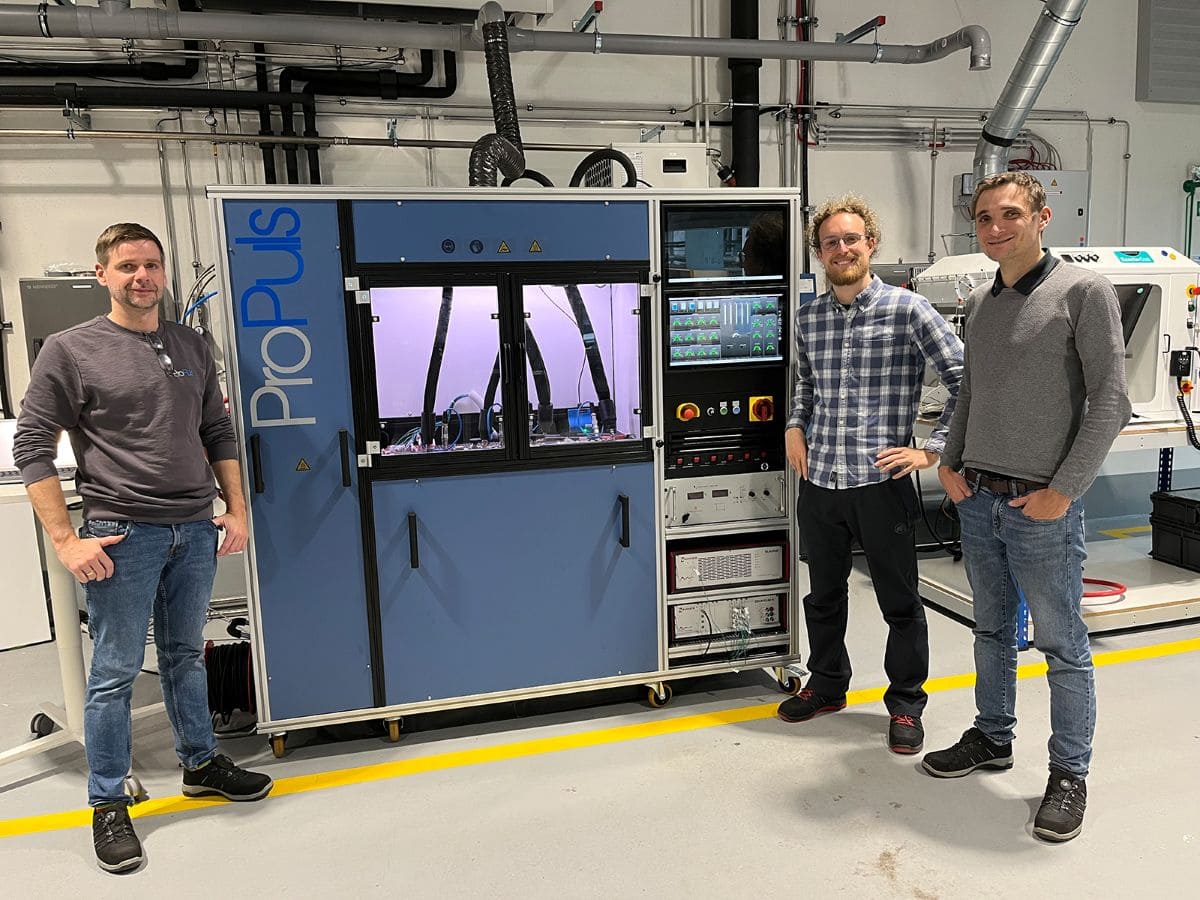
“At Fraunhofer IFAM, we developed new membranes for the electrolysis of untreated seawater and tested them on a modular electrochemical test bench,” added Andreas Brinkmann, a researcher in the Adhesion and Interface Research Department at Fraunhofer IFAM.
Promising materials can then move from small test cells to larger configurations. This makes it possible to assess both material behaviour and the interactions between multiple cells and other system components.
However, practical results have not yet been published, making it difficult to determine how much less efficient direct seawater electrolysis remains, even with the new membranes.