How geothermal batteries can reduce AI data center energy consumption
Over the past few years, artificial intelligence (AI) has evolved from a niche area of IT research into a commercial industry worth trillions of dollars. As AI applications continue to expand, so does the energy demand of the data centers that power them.
The largest share of electricity consumption naturally comes from computing power. A single query to a large language model such as Gemini or ChatGPT consumes around 3 Wh, roughly ten times more than a standard Google search.
However, servers account for only part of a data center’s total energy demand. Electricity is also required for storage systems, networking equipment, cooling and environmental control systems, backup power infrastructure, and building services such as lighting.
How much electricity do data centers consume?
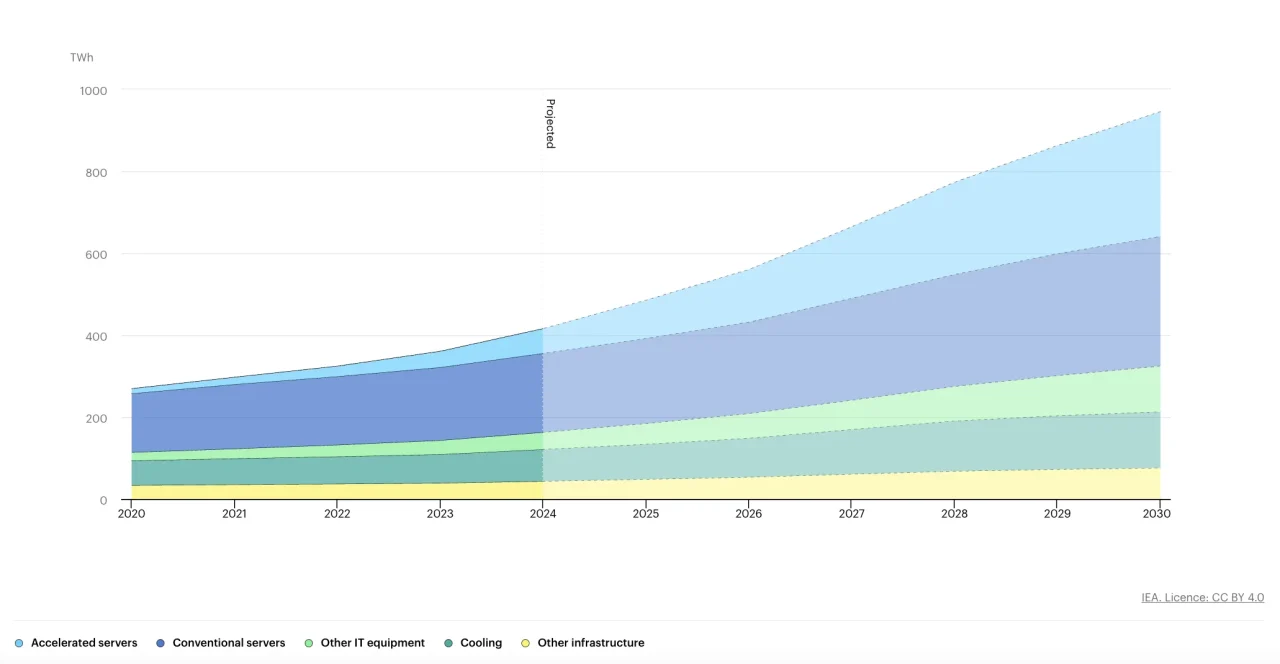
The combined impact of these systems is becoming increasingly significant for global electricity demand. In 2024, data centers, including both AI and conventional facilities, accounted for around 1.5% of global electricity consumption, equal to 415 terawatt-hours (TWh). By 2030, driven largely by artificial intelligence, their electricity demand is expected to reach 945 TWh, representing just under 3% of global electricity consumption.
Reducing this growing demand has become a strategic priority for the United States, China and Europe, which together account for around 85% of global data center electricity consumption. The challenge is also becoming increasingly relevant in Africa, where digital infrastructure is expanding alongside investments in new data center capacity.
One of the most immediate opportunities lies in improving cooling systems, which account for between 10% and 39% of a data center’s total electricity consumption, depending on computing workloads. This is the focus of a new study by researchers Yu-Feng Lin and Andrew Stumpf of the Illinois State Geological Survey, together with postdoctoral researcher Upasana Pandey. Their research evaluates Aquifer Thermal Energy Storage (ATES) as a technically viable solution for cooling AI data centers.
Although the study focuses on the United States, which alone represented 45% of global data center electricity demand in 2024, its findings are relevant to many other regions developing digital infrastructure.
Geothermal batteries
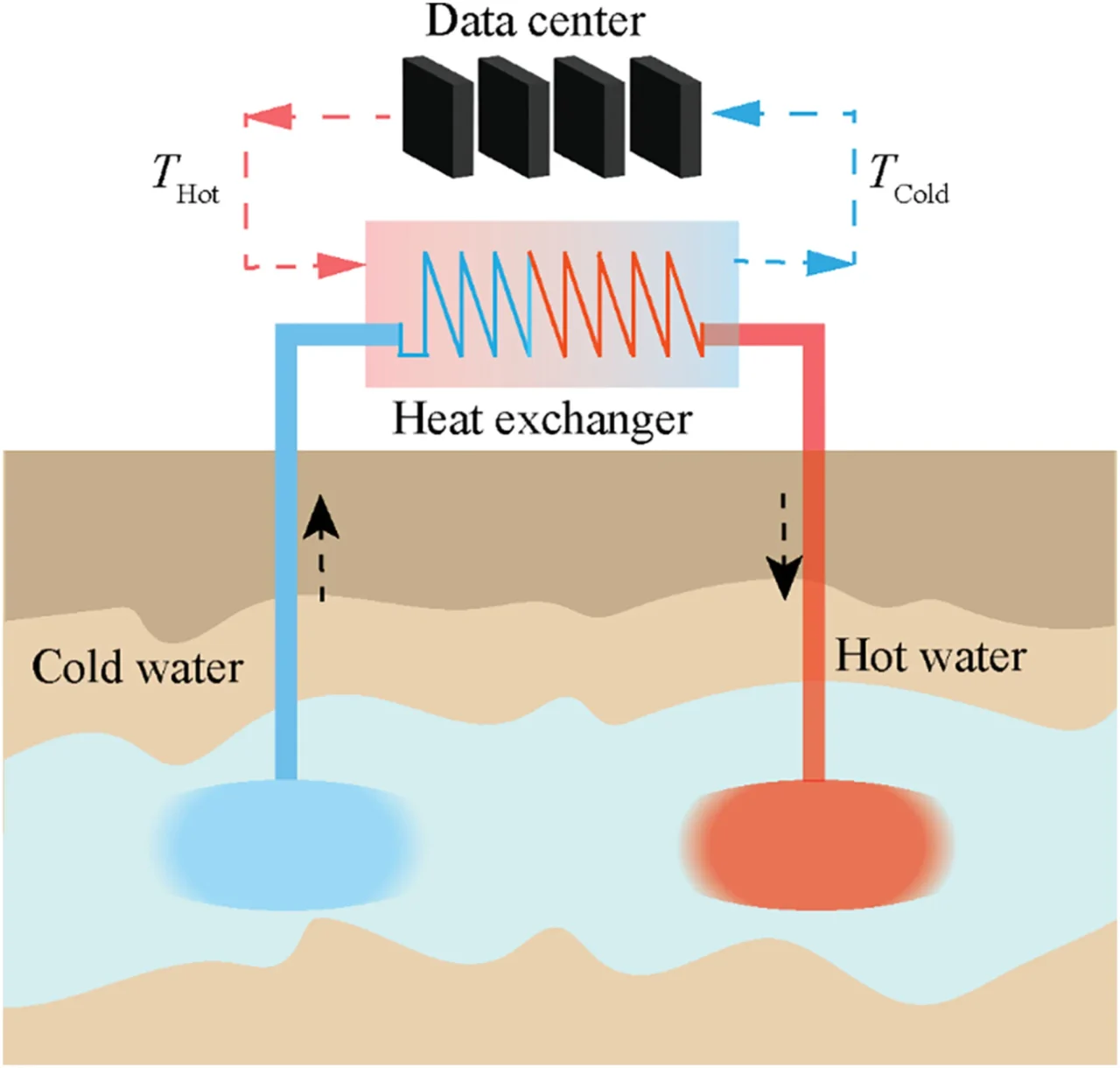
Aquifer Thermal Energy Storage (ATES) functions as a type of geothermal battery by using underground aquifers, where temperatures remain naturally stable throughout the year, to store and recover seasonal thermal energy.
During summer, cool groundwater is pumped from a “cold well” and circulated through a heat exchanger to cool data center servers. Once it has absorbed heat, the warmer water is reinjected into a separate “warm well.” In winter, the process is reversed. The heat stored in the warm well can then be used to heat nearby buildings or supply district heating networks. After releasing its thermal energy, the cooled water is returned to the cold well, ready for the next seasonal cycle.
Geothermal batteries are not a new technology. Europe has decades of experience deploying ATES systems, with the Netherlands leading the sector by hosting around 85% of all operational ATES installations worldwide, more than 3,000 systems in total. This leadership reflects both favourable hydrogeological conditions and a supportive regulatory framework. Sweden, Belgium and Denmark follow, together accounting for roughly 10% of global installations.
However, integrating these systems into AI data center cooling infrastructure requires additional technical and economic assessments.
Low-temperature and high-temperature ATES systems
The study distinguishes between two categories of aquifer thermal energy storage based on storage temperature: low-temperature ATES (LT-ATES) and high-temperature ATES (HT-ATES).
According to the research published in NGWA, LT-ATES systems are generally “charged during the warm season by injecting waste heat into the aquifer at temperatures up to approximately 25°C and often operate in combination with a heat pump. In contrast, HT-ATES systems operate at significantly higher storage temperatures, typically above 40°C.”
This means LT-ATES geothermal batteries are well suited to air-cooled or hybrid air-liquid cooled data centers, where waste heat temperatures typically range from 15°C to 30°C.
HT-ATES systems, meanwhile, are better suited to modern liquid-cooled AI data centers that generate waste heat at temperatures between 50°C and 60°C.
How much energy can be saved?
Under an ideal scenario based on a medium-sized data center requiring 5 MW of continuous cooling capacity, geothermal batteries with a coefficient of performance (COP) above 10 could reduce annual cooling electricity consumption from 14.6 GWh using conventional cooling systems to just 4.4 GWh.
That represents an electricity saving of approximately 70%.
The researchers also examined the geographic suitability of the technology, highlighting Illinois as particularly favourable because of its pronounced seasonal temperature variations, abundant aquifers and suitable groundwater chemistry.
While the technology is mature and the geological conditions are well suited, significant economic barriers remain. ATES systems require higher upfront investment than conventional cooling technologies, although they deliver lower operating costs over their lifetime.
The main challenge is financial rather than technical. Most projects are assessed over investment horizons of only five to ten years, whereas geothermal batteries deliver their greatest economic value over operating lifetimes of 20 to 40 years. As countries, including those across Europe and emerging digital markets in Africa, continue expanding AI infrastructure, longer-term investment strategies could make these systems increasingly attractive.