Thermal batteries from steel slag: the Penn State study
Italy’s steel industry could provide fresh momentum for the energy storage sector, particularly for technologies that store energy as heat. A new scientific study from Pennsylvania State University in the United States explains how.
Researchers Michael Enemuo, Arish Dahi Taleghani and Olumide Ogunmodimu assessed the potential of steel slag for use in modern thermal batteries. The circular approach could create another opportunity to recover value from these industrial by-products, alongside established applications in cement mixtures and more experimental uses in chemical catalysis.
To fully understand the potential of the research, however, it is worth taking a step back.
Steel slag: EAF, LMF and BOF
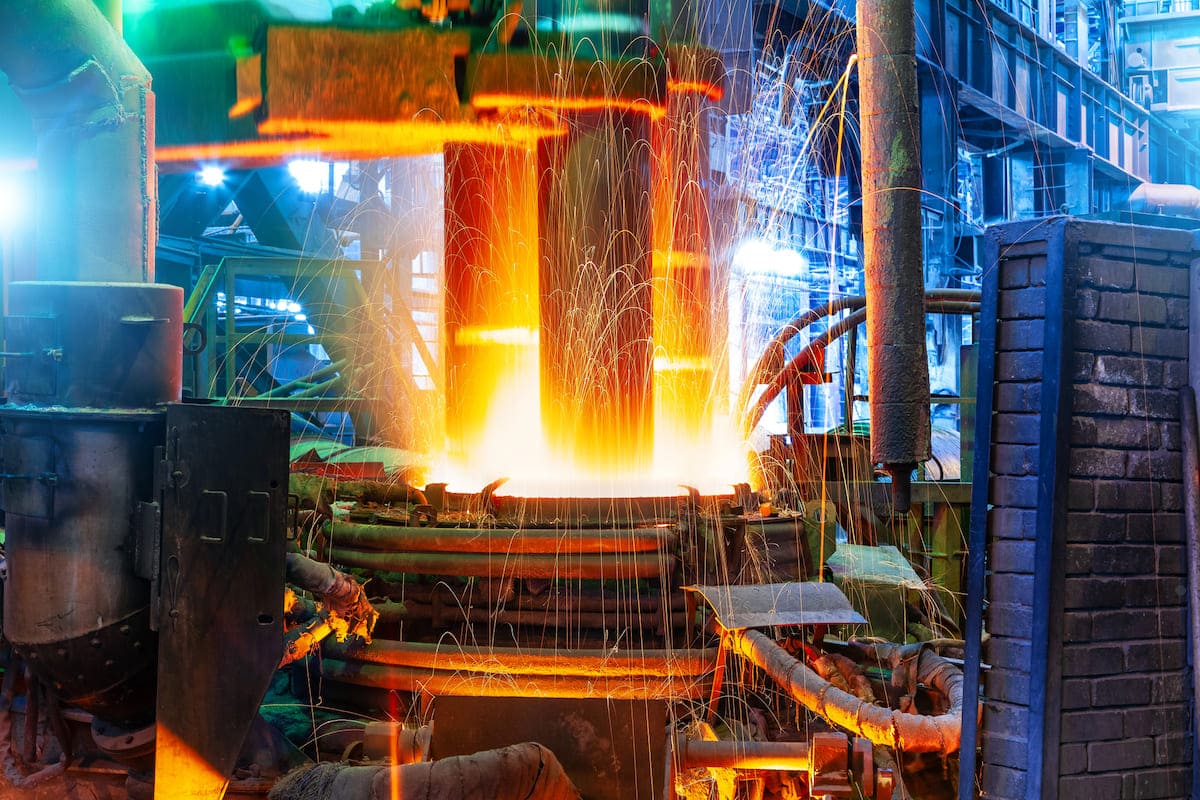
Steel slag generally refers to three types of waste generated during different stages of metal melting, refining and processing:
- Black slag, produced in an electric arc furnace (EAF) during the initial melting of ferrous scrap and rich in iron oxides, silica and lime.
- White slag, produced during secondary metallurgy in ladle metallurgy furnaces (LMF) and rich in lime, magnesium oxide and alumina.
- BOF slag, produced in basic oxygen furnaces (BOF) during the conversion of liquid pig iron into steel and characterised by high levels of lime and silica.
The latest available data for Italy show production of around 3 million tonnes of steelmaking slag, including 2.5 million tonnes of black slag alone from steel plants in northern Italy. The remainder is split almost equally between LMF and BOF slag, with the latter generated exclusively at the former ILVA plant, now Acciaierie d’Italia, in Taranto.
Recycling steelmaking slag
As documented in a recent WWF report, EAF waste is not only the most abundant type of slag but also the one that has already found applications as both aggregate and non-aggregate material in the construction sector.
One example is Granella®, an industrial aggregate of steelmaking origin used in the production of asphalt and cement mixes, as well as cement-treated materials.
For other types of steelmaking waste, efficient reuse options are still lacking, although research and projects are exploring ways to close the loop.
A 2022 study conducted by the University of Bari in collaboration with the Research and Development Department of Acciaierie d’Italia and Italy’s National Research Council, CNR, used BOF slag supplied by Acciaierie d’Italia as a catalyst for the artificial photosynthesis of hydrogen and methanol.
Low-cost materials for thermal energy storage
The Penn State research follows the same circular approach, but aims to take the recovery of steelmaking by-products a step further.
The researchers focused on thermal energy storage, a technology that currently relies mainly on molten salts and phase-change materials (PCMs), which come with several challenges. These range from high costs and corrosion to cyclic degradation and complex containment requirements.
In this context, steel industry slag represents a low-cost resource, at around USD 5 per tonne compared with more than USD 42 per kilogram for nitrate salts. It can operate at temperatures of up to 1,000°C, making it a potentially affordable material for high-temperature thermal energy storage.
All three slag types have compositions suited to heat storage. Around 70% to 88% of their weight consists of a mixture of iron, calcium and silicon oxides, providing phase stability, high storage potential and good heat-transfer properties.
The same characteristics could also be relevant to industrial decarbonisation strategies in energy-intensive sectors elsewhere, including in African economies with significant steel and industrial activity.
EAF slag emerges as the most promising candidate
However, one material performed better than the others: EAF slag emerged as the most promising candidate for thermal batteries from steel slag.
“Among the materials tested, electric arc furnace slag offers the most favourable starting point due to its low mass loss and minimal detectable free lime,” Enemuo explained, factors that almost completely eliminate the risk of structural disintegration or cracking. He also highlighted its “relatively stable response to heat flow and favourable phase composition”.
“Based on the indirect indicators of physicochemical and thermal stability evaluated in this work, the preliminary suitability ranking for thermal energy storage (TES) systems is as follows: electric arc furnace slag, followed by ladle metallurgy furnace slag, and then basic oxygen furnace slag,” Ogunmodimu added.
The scientists stress, however, that final validation in real-world installations will require direct measurements of thermal conductivity, specific heat capacity, density and resistance to prolonged thermal cycling during charging and discharging.
The study, “Comparative physicochemical and thermal stability screening of steelmaking slags for high-temperature thermal energy storage applications”, was published in Solar Energy in 2026.