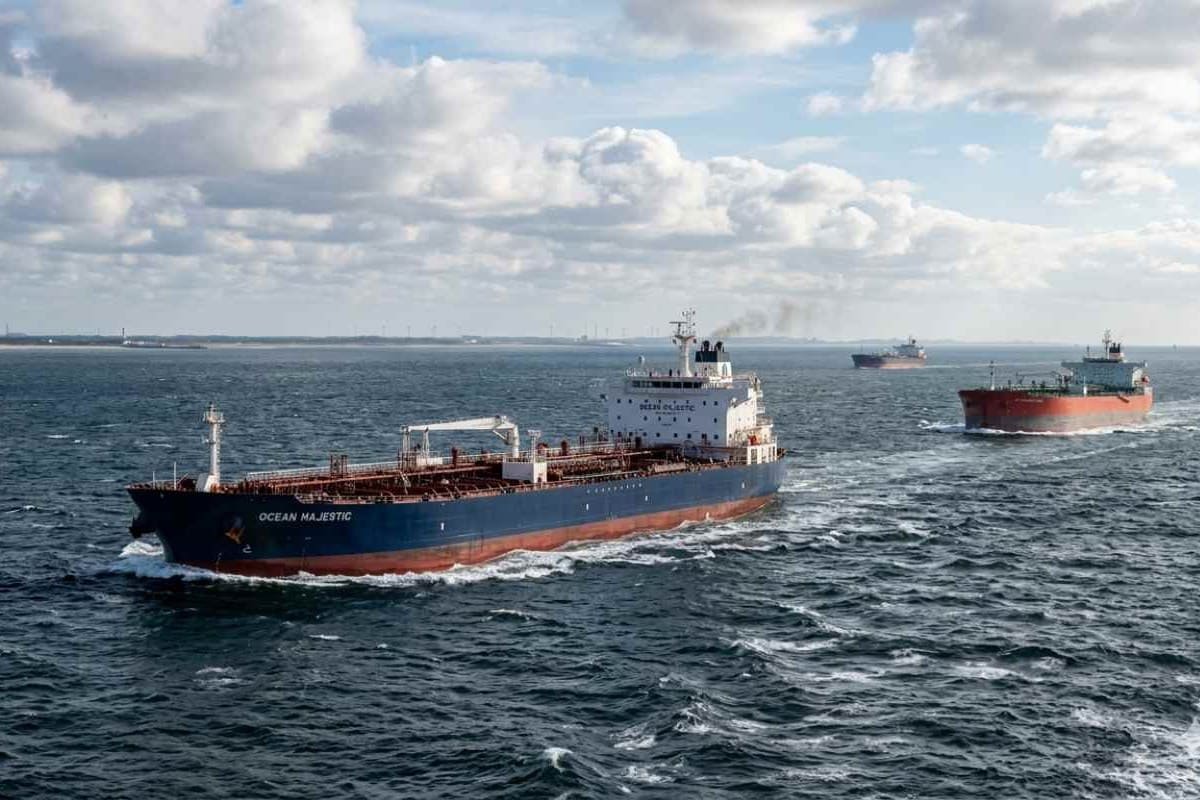
A global oil market under simultaneous pressure
The global oil market confirms a phase of extreme instability, with demand declining, supply disrupted by the closure of the Strait of Hormuz, and prices reaching historic highs. The International Energy Agency’s latest monthly report shows the global energy system facing a simultaneous shock across multiple fronts.
Global oil demand is now expected to decline by 80,000 barrels per day in 2026, reversing previous forecasts that projected growth of 730,000 barrels per day. The deterioration is directly linked to the impact of the conflict involving Iran and restrictions on maritime traffic through the Strait of Hormuz.
At the same time, global supply has experienced an unprecedented collapse. In March alone, production fell by 10.1 million barrels per day, dropping to 97 million barrels per day, with the largest impact on OPEC+ output.
Widespread demand contraction and pressure on consumption
The slowdown in demand is not limited to a single region. The IEA highlights that the decline began in the Middle East and Asia-Pacific but is now spreading globally due to the combined effect of high prices and product scarcity.
In detail, demand fell by 800,000 barrels per day in March and by 2.3 million barrels per day in April, marking the sharpest decline since the pandemic.
The sectors most affected are mobility and petrochemicals. Jet fuel consumption has dropped significantly due to reduced flight activity, while Asian petrochemical producers have cut output due to a lack of feedstock. Households and businesses relying on LPG are also facing direct impacts on both costs and availability.
This is compounded by public policies introduced in several countries to contain demand and limit the impact of high prices on consumers, a dynamic increasingly relevant in import-dependent regions, including parts of sub-Saharan Africa.
The global logistical bottleneck of Hormuz
On the supply side, the crisis in the Strait of Hormuz is the main destabilizing factor. Shipments through this strategic chokepoint have collapsed from over 20 million barrels per day to around 3.8 million, resulting in a loss of exports exceeding 13 million barrels per day.
Alternative routes have partially offset the disruption, with flows rising to 7.2 million barrels per day, but not enough to rebalance the market.
The overall effect is a drastic reduction in global supply, combined with infrastructure damage and cumulative losses estimated at over 360 million barrels in March and 440 million in April.
Refining capacity has also been affected. Refineries in the Middle East and Asia have reduced processing by around 6 million barrels per day, while for the whole of 2026 a contraction of 1 million barrels per day is expected.
Rising prices and growing tensions in the oil market
The direct result of the supply shock is a surge in prices. North Sea Dated crude has risen to around 130 dollars per barrel, an increase of 60 dollars compared to pre-conflict levels.
Refined products are seeing even sharper increases. Middle distillates in Singapore have exceeded 290 dollars per barrel, reaching new historic highs.
OPEC confirms the upward trend, noting that its reference basket increased by 48.46 dollars per barrel month-on-month, reaching an average of 116.36 dollars.
This dynamic is further intensified by the divergence between spot and futures prices, with spot markets rising sharply due to difficulties faced by refineries in sourcing alternative cargoes.
OPEC production and the demand-supply balance
OPEC provides a complementary perspective, highlighting that crude production among member countries fell to 35.06 million barrels per day in March 2026, a monthly decrease of 7.7 million barrels per day.
Despite the drop in supply, OPEC forecasts global demand at around 106.5 million barrels per day in 2026, higher than in 2025.
This divergence from IEA estimates reflects a different interpretation of the economic cycle and the impact of the geopolitical crisis. While the IEA emphasizes demand contraction, OPEC maintains a more resilient outlook, expecting a gradual recovery over the course of the year.
EU policy response and structural vulnerabilities
An analysis by the Oxford Institute for Energy Studies addresses Europe’s structural vulnerability. The study highlights that Europe is facing not only a supply issue but also a quality mismatch in available crude, with direct implications for refinery efficiency.
To offset the shock, member states have agreed to release around 400 million barrels from strategic reserves, including 118 million from the European Union. However, the study stresses that these measures provide only temporary relief.
National policies such as tax cuts, subsidies and price caps may also distort market signals, slowing demand reduction and worsening imbalances.
Future scenarios for the global oil market
Outlook remains heavily dependent on the evolution of the Middle East conflict and the ability to restore flows through the Strait of Hormuz. The IEA outlines a base scenario in which energy supplies resume by mid-2026, but without returning to pre-crisis levels, leaving the market in a fragile balance.
A more critical alternative scenario assumes prolonged disruptions. In this case, reduced supply, declining inventories and limited refining capacity would continue to exert structural pressure on prices and on importing economies, including several African countries exposed to fuel price volatility.
OPEC’s outlook introduces a degree of stabilization, projecting demand above 106 million barrels per day in 2026 and a gradual rebalancing between supply and demand. However, this scenario assumes a progressive normalization of operational and logistical conditions, which remain highly uncertain.
The Oxford Institute analysis suggests that even with partial recovery of flows, the system will remain exposed to structural vulnerabilities. Europe, in particular, may continue relying on crude grades less suited to its refineries, with negative effects on fuel production and industrial margins.