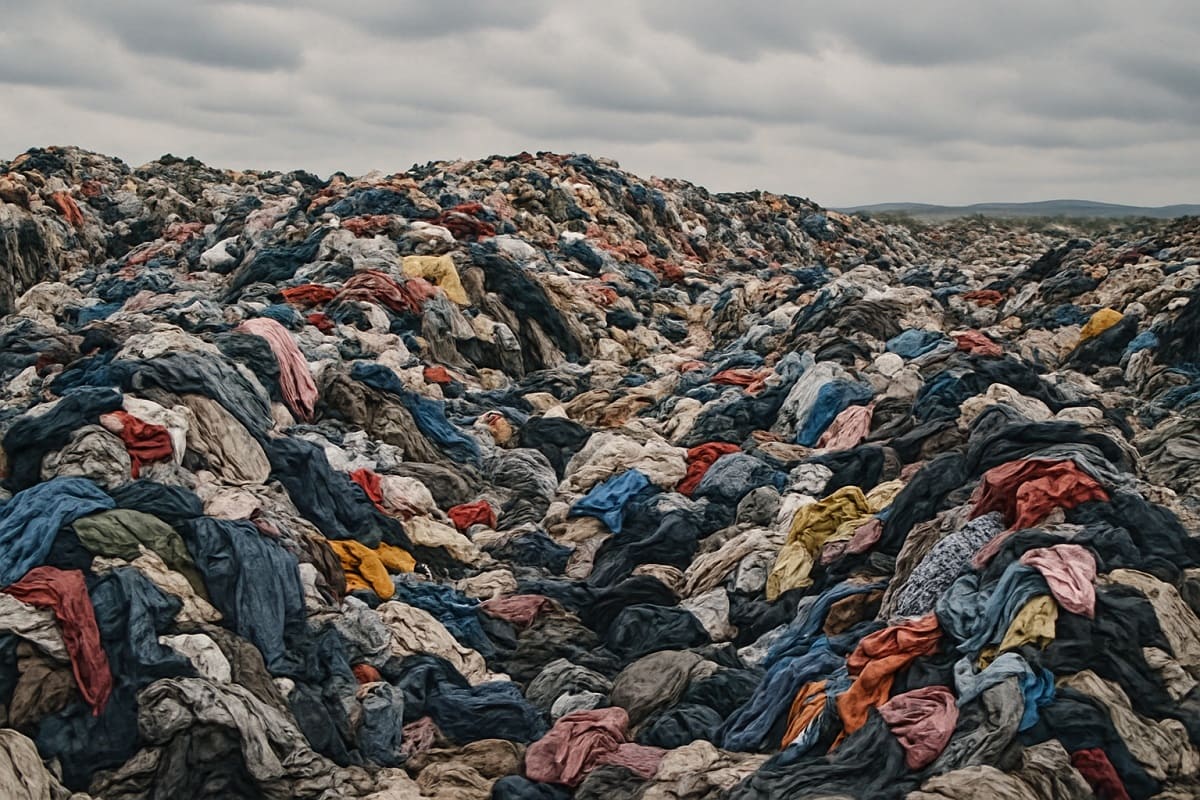
Africa as the world’s textile dumping ground
Every year, the world generates around 83 million tonnes of textile waste, increasingly difficult to manage. Of this total, 65% consists of synthetic fibres derived from fossil fuels. The harsh reality is that every second, the equivalent of a garbage truck full of clothing is burned, released into the environment or sent to landfill.
What wealthy countries consume, or discard, often ends up forming artificial mountains of waste in Africa. This is where Europe sends its discarded clothing, frequently produced by fast fashion companies.
The scale of textile waste imports
According to the latest Greenpeace Africa report, Draped in Injustice, in 2019 alone the European Union shipped 46% of its used textiles to Africa. This figure refers only to European countries, but in practice Africa has become the global dumping ground for textile waste. Around half of the clothing exported from the EU was already unsellable.
The result has been a rise in environmental pollution in countries such as Angola, Kenya, the Democratic Republic of the Congo, Tunisia, Ghana and Benin, which are among the most affected.
Import data on textile waste
In 2022, these countries imported nearly 900,000 tonnes of second-hand clothing. Kenya alone received 900 million used garments in 2021, mainly from Europe and the United Kingdom. Around 50% of these items were of poor quality or damaged, ending up in landfills such as Dandora, burned in the open or contaminating waterways like the Nairobi River.
In Uganda, 100,000 tonnes of used clothing were imported in 2023, particularly from China, the United States and Canada. It is estimated that up to 48 tonnes of these garments become textile waste every day. The situation in Ghana is similarly critical, with markets receiving around 15 million second-hand garments each week, almost half of which are unsellable and ultimately dispersed into the environment.
In many cases, landfills are located within highly sensitive biodiversity habitats. Local communities near several sites report that fishing nets, waterways and beaches are increasingly clogged with synthetic fast fashion garments exported from the United Kingdom and other European countries. The brands identified are widely known and belong to the fast fashion industry.
Greenpeace calls out fast fashion
“The report published by Greenpeace Africa describes an alarming situation, highlighting the environmental and health impacts of a phenomenon that has spiralled out of control, the trade in second-hand clothing in extremely vulnerable territories,” said Chiara Campione of Greenpeace Italy. “It is essential to address the problem at its source by tackling unsustainable production systems such as fast fashion and ultra-fast fashion.”
Emissions, microplastics and chemicals
The fashion industry is responsible for up to 8–10% of global greenhouse gas emissions, due to high energy consumption along global supply chains. This issue is compounded by waste-intensive business models like fast fashion, which produce disposable clothing designed to become waste within weeks.
Synthetic textiles also contribute to the release of microplastics into the environment, undermining the oceans’ ability to absorb carbon and accelerating climate change.
The fashion supply chain is also a major consumer of chemicals. Of the approximately 3,000 substances used in textile washing and dyeing processes, at least 250 are known to be hazardous. In March 2022, the European strategy for sustainable and circular textile products was approved. It aims to extend extended producer responsibility across the entire textile product life cycle and introduce stricter rules on textile exports to non-OECD countries. The regulatory framework is still under development.