Solar farms reduce dust pollution and improve air quality
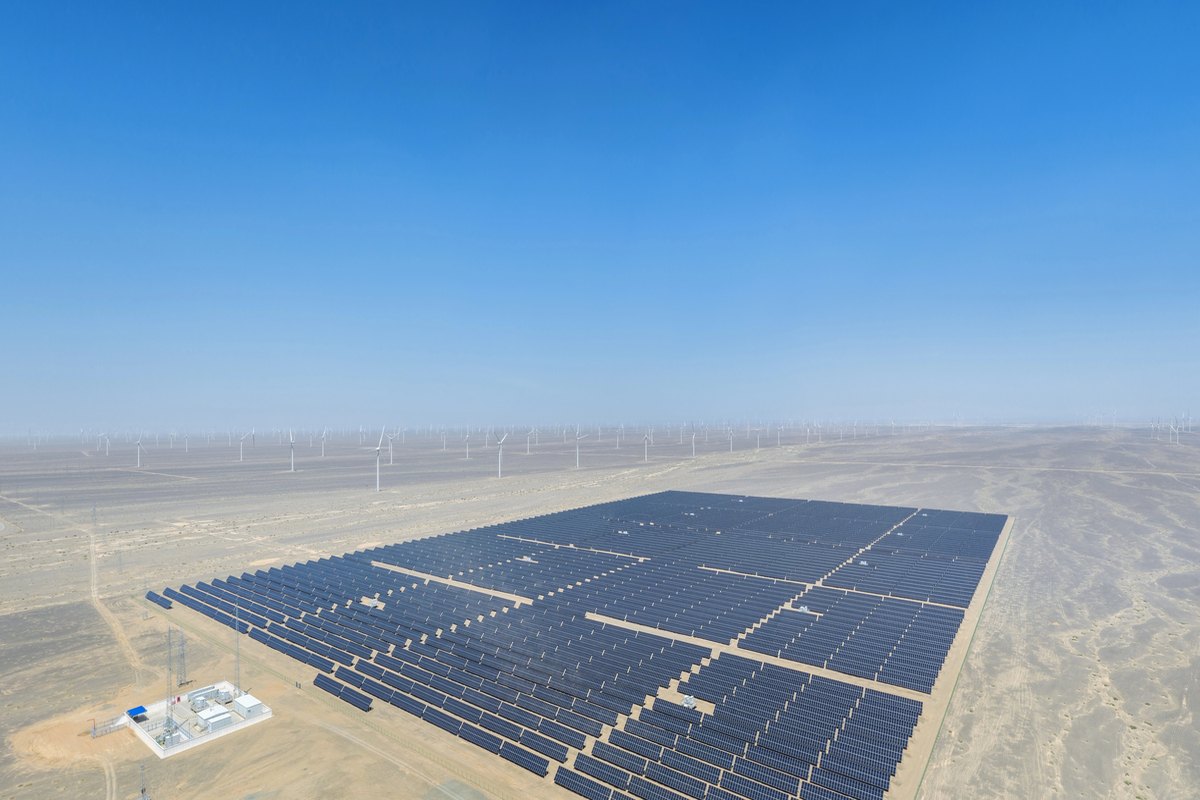
Sandstorms pose a threat to public health. In northern China, they are a particularly serious problem during spring, when strong winds lift small mineral particles from dry, sparsely vegetated soil and carry them hundreds of kilometres to major cities such as Beijing. A new study, however, has shown that solar farms built in China’s Gobi Desert region can have a positive impact on air quality.
These facilities help reduce the dust pollution affecting northern China. Large solar installations can slow winds close to the ground, making it more difficult for dust particles to be lifted into the atmosphere.
China is expanding large-scale solar installations in desert regions as part of efforts to meet its 2060 carbon neutrality target. Until now, however, it was unclear whether large solar farms could also help reduce dust pollution, in addition to generating clean energy.
Models developed by a research team led by Yueting Hao of Nanjing University investigated this question. The study suggests that expanding solar farms could reduce average spring concentrations of airborne dust particles in northern China by almost 14%.
The findings may also be relevant to other dry and dust-prone regions where large-scale solar development is expanding, including parts of Africa, although the study itself focuses specifically on northern China.
China’s fight against air pollution
Over the past decade, China has made significant progress in tackling air pollution. Since the launch of its National Air Quality Action Plan in 2013, the country has sharply reduced levels of airborne fine particles, those with a diameter below 2.5 micrometres.
This progress has mainly come from cutting emissions linked to fossil fuel use.
However, China’s air quality has continued to be affected by dust pollution, which now accounts for a larger share of airborne particulate matter. The proportion of airborne particulate pollution made up of larger particles, between 2.5 and 10 micrometres in diameter, rose from around 55% in 2013 to 65% in 2023.
How solar farms reduce dust pollution
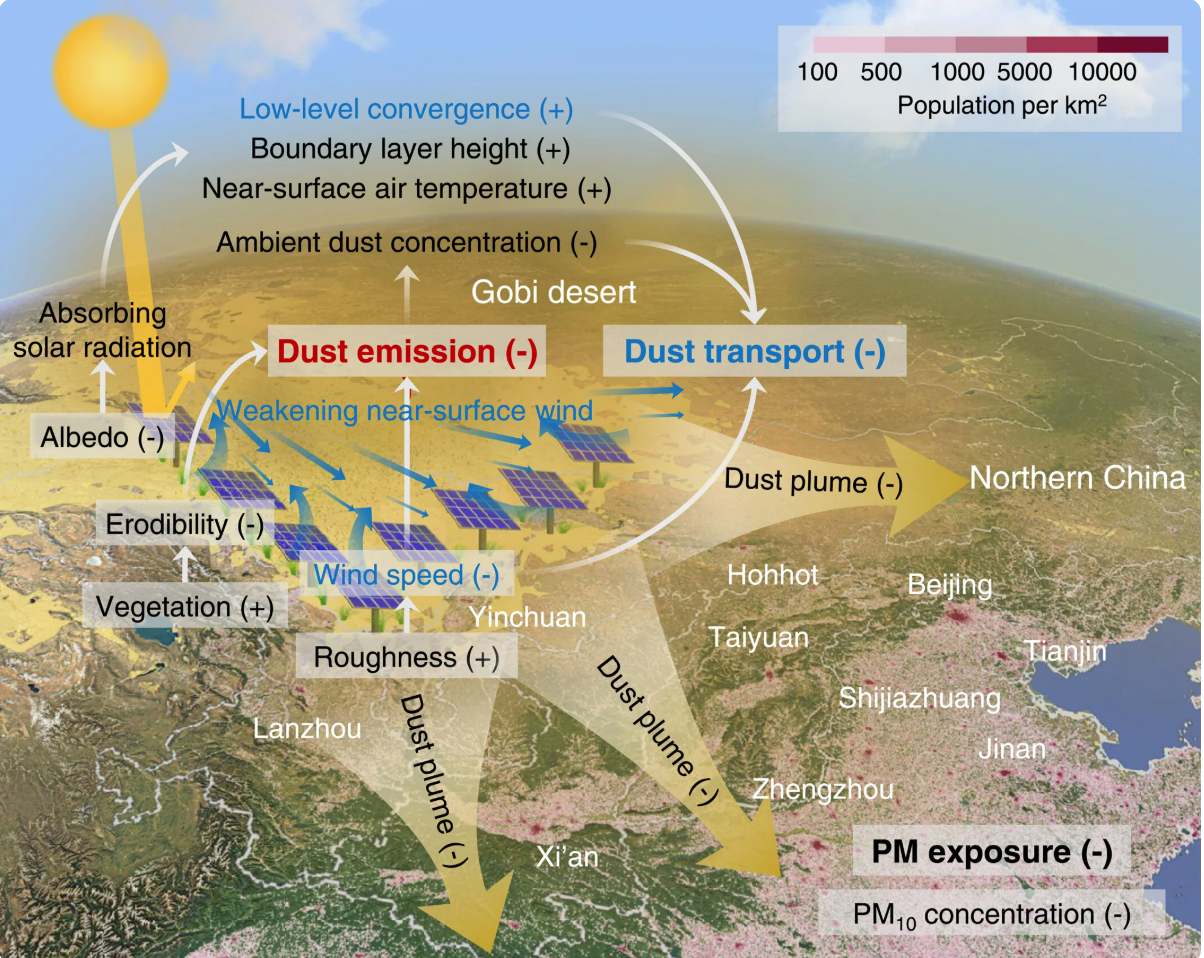
The study shows that solar panels act as a protective shield over the ground. They reduce wind speeds at the surface and help stabilise the soil. By changing the desert environment and local weather patterns, they can mitigate air pollution.
The research also shows that existing solar farms are already helping to improve air quality, and this positive effect could increase as solar energy expands.
In the areas studied, vegetation cover increased by around 17% during spring compared with conditions before the solar farms were built. The research team also estimated that soil erodibility, or how easily soil can be carried away by the wind, fell by the same percentage.
If China’s solar expansion continues in line with its 2060 carbon neutrality plans, the area covered by solar farms in the Gobi Desert region would increase almost elevenfold. Expansion on this scale could reduce dust transport by around 21%.
Across northern China, average spring concentrations of larger dust particles could consequently fall by around 14%. Without the additional solar farms, higher wind speeds by 2060 could increase spring dust emissions from the Gobi Desert by around 13% and dust transport by approximately 27%.
The study therefore highlights a previously underappreciated benefit of renewable energy infrastructure, showing its potential to deliver two advantages at once: reducing dust pollution while also contributing to decarbonisation.